Colors
Vantablack Car Wrap: What the Look Means and How Real Vinyl Compares
Published
The idea of a vantablack car wrap has captured the automotive imagination for years. Online videos and concept photos show cars that look like rolling two-dimensional silhouettes, appearing as though a hole was cut directly out of reality. When people search for a vantablack car wrap, they are usually hunting for that exact aesthetic: an ultra-dark, light-absorbing finish that erases surface glare and turns complex body panels into an austere, graphic presence.
Yet understanding how that aesthetic translates to a real vehicle wrap requires separating internet spectacle from the physical realities of automotive vinyl.
The Reality of Vantablack and Automotive Films
True Vantablack is not a vinyl film. It is a specialized laboratory coating composed of vertically aligned carbon nanotube arrays grown under high temperatures. It is fragile, sensitive to moisture and touch, and cannot be manufactured as a flexible adhesive film that can be stretched over a bumper or fender.
When drivers talk about wrapping a car in Vantablack, what they are really looking for is the deepest possible light absorption available in automotive vinyl. They want a finish that eliminates specular reflections and strips away surface highlights.
In real wrap catalogs, achieving that light-swallowing stance comes down to choosing between deeply pigmented black vinyls across specific finishes like matte, satin, and ultra-flat sheens. Across a catalog of 782 vinyl colors, black accounts for 67 distinct color options. The difference between a standard black wrap and an extreme, silhouette-like presence lies entirely in how the film interacts with ambient light.
How Light Absorption Changes Vehicle Bodywork
Every vehicle design depends on light and shadow to define its character. Sharp shoulder creases, domed hoods, sculpted rocker panels, and aggressive air vents are visible because light catches the peaks and casts shadows into the valleys.
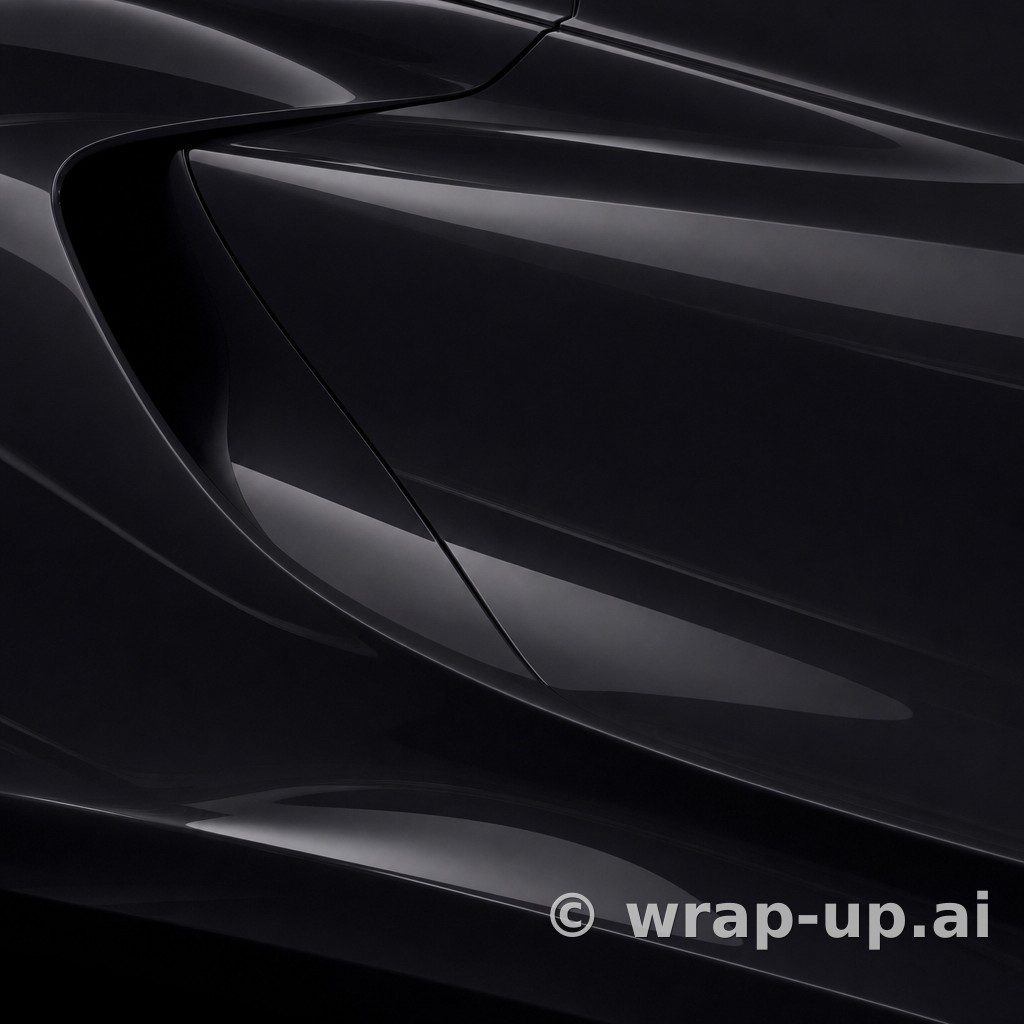
When you wrap a car in a high-gloss finish, reflections accentuate every crest and curve. An ultra-dark, low-reflectivity finish does the exact opposite:
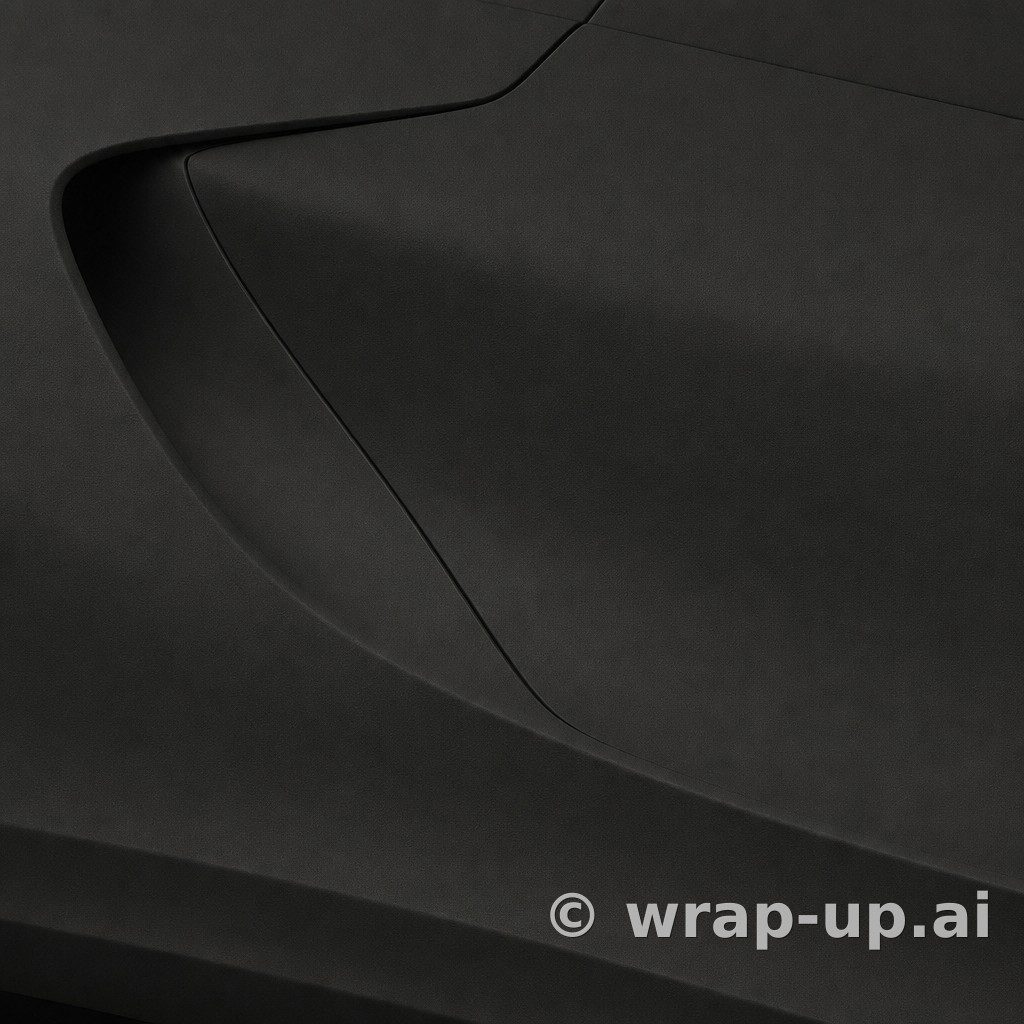
- Contour suppression: Deep matte and absolute matte films scatter reflected light in all directions rather than bouncing it straight back to the eye. This softens the crispness of body lines, making hard-edged panels look broader and smoother.
- Silhouette emphasis: Without bright highlights to reveal surface depth, the viewer's eye shifts to the vehicle's outer perimeter. The overall stance, roofline, wheel arches, and glasshouse outline become the focal point.
- Contrast with trim: When the bodywork ceases to reflect light, components that do reflect—such as headlights, tail lamps, brake calipers, and glass—pop with heightened intensity.
Within real-world vinyl options, low-sheen categories provide varying degrees of this void effect. In a comprehensive wrap collection, you will find 166 matte options, 104 satin finishes, and 4 absolute matte films. A satin black retains a faint, silky sheen that preserves subtle panel curvature under direct sun, while an absolute matte or deep matte black flattens curves almost entirely, coming closest to the visual mood of a vantablack car wrap.
Why Swatches and Social Media Clips Mislead
A three-inch swatch sample placed on a desk cannot show you what a low-reflectivity black will do to your car. On a flat square of vinyl indoors, matte black simply looks like a dark square of plastic. It tells you nothing about how a steep windshield angle, a curved front fender, or a concave door panel will swallow shadows under an overcast sky or street lighting.
Similarly, photos and videos of someone else's wrapped car can be deceptive. Studio lighting, circular polarizers on camera lenses, and post-production color grading often exaggerate the darkness of a car, making standard matte vinyl appear far darker and flatter on screen than it appears in daylight. Furthermore, bodywork shapes differ wildly. A low-sheen black that looks menacing on a wide, chiseled sports car might cause a rounded crossover to lose its proportions entirely.
To make an informed choice, you need to see how low-reflectivity black tones distribute shadow across the specific angles and curves of your actual car.
Visualizing Deep Black Finishes on Your Vehicle
Rather than guessing based on digital renders of unrelated cars or flat color swatches, you can test how dark finishes sit on your own vehicle. With WrapUp AI, you upload a photo of your own car in its real-world environment and test real vinyl options from leading manufacturers—including Avery SW900, 3M 2080, Orafol 970RA, KPMF, and Inozetek Vinyl.
A rendered color is an impression, not an absolute color match, but it gives you an immediate, realistic preview of how light falls across your car's panels. You can see whether a deep matte black flattens your car's lines too drastically or whether a satin black provides the balance of darkness and definition you desire. You can explore the catalog and get three renders completely free, with no account needed to start.
Test the look on your vehicle today by exploring the WrapUp AI visualizer.
See any car in any wrap colour — three renders free. Try WrapUp AI