Colors
Rose Gold Car Wrap: Choosing Tones, Metallic Depth, and Finishes
Published
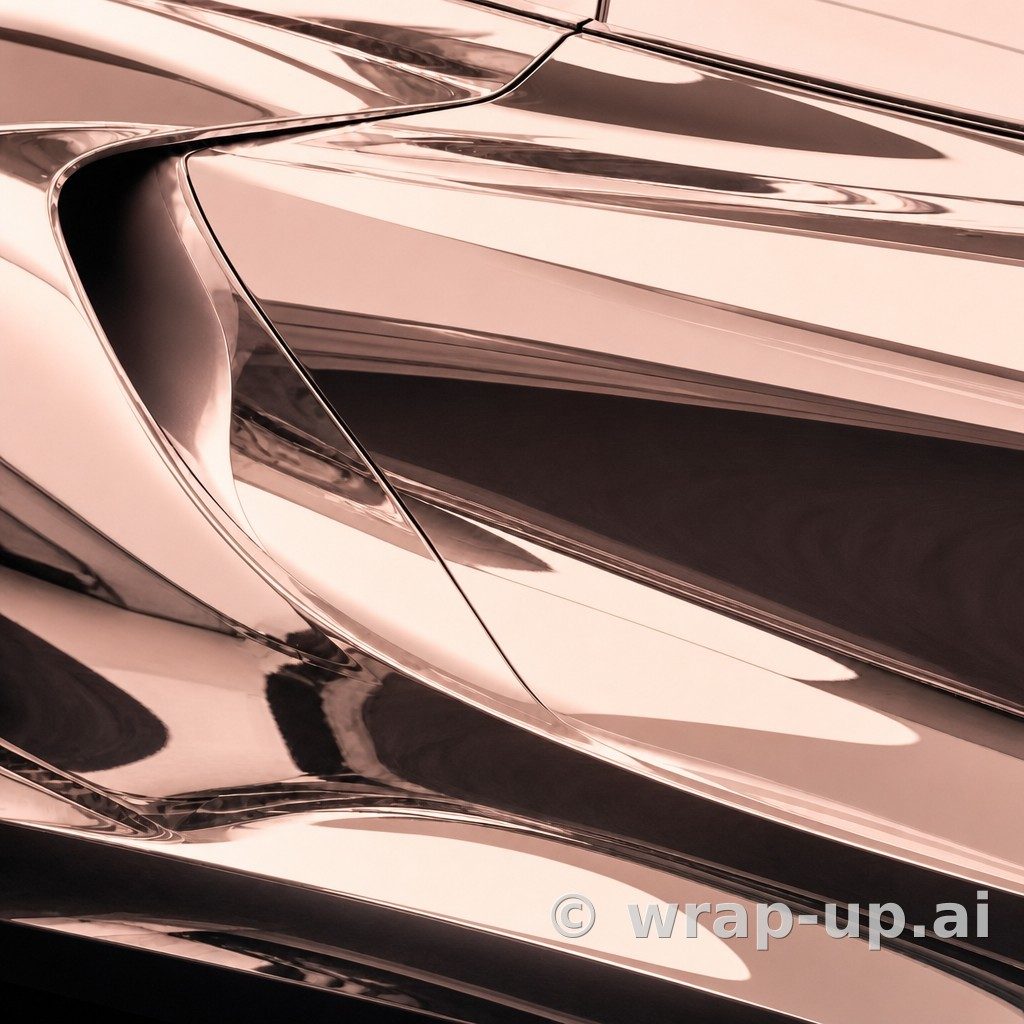
Choosing a rose gold car wrap involves balancing warmth, reflection, and colour shift. Rather than being a single static shade, rose gold sits directly at the intersection of warm metals and muted pastels. On automotive bodywork, it shifts constantly between pale bronze, warm copper, champagne, and gentle blush pink depending on the angle of the panel and the ambient light.
Understanding how rose gold behaves across complex body lines helps ensure the finished car matches your expectations.
The Spectrum of Rose Gold Tones
Rose gold is not a primary tone; it is a blend. When evaluating films that fall into this spectrum, you will generally find three primary directions:
- Blush-dominant rose gold: These films lean heavily towards pink undertones, using fine metallic flake to add an anodised, metallic quality without turning fully coppery. In low light, they read as an elegant, warm pink, turning to a pale metallic shimmer under direct sunlight.
- Copper-dominant rose gold: These shades carry deep orange and red undertones. Under direct sun, they show intense warmth and amber reflections, settling into a rich, dusty terracotta or bronze in shaded environments.
- Champagne rose gold: Leaning closer to pale yellow gold with a hint of warmth, these films look like soft white gold until the light strikes an edge, revealing a delicate rose tint along the highlight line.
In our catalogue of 782 colours, rose gold options draw from overlapping colour families, bridging the 41 gold tones and 39 pink tones, often incorporating metallic flake or qualities found across the 75 pearlescent films. Because different vinyl manufacturers formulate the balance of pink pigment and metallic dust differently, two rolls described as rose gold can look completely distinct from one another.
How Finishes Transform Rose Gold
The choice of finish fundamentally changes how rose gold interacts with vehicle bodywork.
Gloss and High Gloss
A gloss or high-gloss finish sharpens the contrast between highlights and recesses. High gloss reflects light in sharp, specular points. Along a car’s bonnet ridges and door creases, a gloss rose gold will flash bright, almost silver-white, before transitioning quickly into warm copper along the mid-tones, and soft rose in the shadow lines. If your car has intricate styling lines, gloss highlights those creases crisply.
Satin
Satin is often regarded as the natural partner for metallic shades. By diffusing direct light rather than bouncing it as a mirror, a satin finish spreads the highlight broadly across curved panels. The transitions between the bright copper crest of a panel and the deeper pink roll-off become gentle gradients. Satin gives rose gold an appearance akin to brushed or anodised alloy, muting excess glare while accentuating the vehicle's overall silhouette.
Matte
Matte finishes eliminate surface gloss entirely. Without sharp reflections to draw the eye, a matte rose gold turns the focus entirely onto the bodywork's volumes and shapes. In matte form, the colour reads softer and more muted, showing a subtle chalky pastel warmth rather than a sharp metallic pop. While shades like Matte Divine Gold (995M) by Orafol 970RA capture pure golden tones, films that introduce pearlescent or pink undertones—such as Frozen Mystic Pink (K75575) by KPMF—demonstrate how non-gloss surfaces flatten reflections while retaining subtle shifts across broad surfaces.
The Problem with Swatches and Online Photos
One of the most common pitfalls when selecting a rose gold wrap is relying on a small swatch sample or photographs found on social media.
A physical swatch booklet typically presents a piece of film no larger than a postcard. Held flat in your hand, you only see the colour at a single angle, under whatever interior lighting is currently above you. A flat swatch cannot demonstrate how the metallic flakes roll around the steep radius of a front wing, or how the roof panel reflects the blue sky overhead.
Similarly, photographs of other cars wrapped in rose gold can be misleading. A wide-bodied sports car photographed in low golden-hour lighting will make a rose gold wrap look dramatically deeper, warmer, and more dramatic than that exact same film would appear on an angular family SUV on an overcast Tuesday morning. Furthermore, horizontal panels such as bonnets and roofs naturally reflect the sky; under clear daylight, a horizontal rose gold panel picks up cool blue skylight, often muting the warm copper and shifting the visible tone towards a cool, silvery lavender.
To understand whether a shade works, you must see how the film’s specific undertones interact with the proportions, panel creases, and angles of your own vehicle.
Test Rose Gold on Your Own Car
Before committing to a colour direction, the clearest way to evaluate a shade is to see it mapped directly to the bodywork you see every day.
WrapUp AI allows you to upload a clear photo of your own car—in its usual surroundings—and visualise genuine vinyl colours across its panels. You can compare how a copper-leaning metallic differs from a pale champagne or a deep satin blush under real lighting. Keep in mind that any digital render provides an impression rather than a microscopic colour match, helping you gauge tone, contrast, and panel response before ordering physical material.
You can generate your first three renders for free, with no account needed to start.
Explore how different tones and finishes sit across your vehicle's lines with WrapUp AI.
See any car in any wrap colour — three renders free. Try WrapUp AI