Colors
How to Navigate Car Wrap Colours and Finishes for Your Vehicle
Published
Choosing car wrap colours can feel overwhelming once you move past broad preferences like blue or grey. Manufacturers produce hundreds of distinct formulations, and two rolls that look nearly identical in an online gallery can behave completely differently when applied across large panels of bodywork.
Finding the right shade is not merely an aesthetic preference. It requires understanding how vinyl pigments react to ambient lighting, how surface finishes reshape vehicle contours, and why colour choices look different on your specific car compared to someone else's.
The Spectrum of Modern Wrap Vinyl
Automotive vinyl has evolved far beyond standard primary tones. When browsing car wrap colours, the options span broad tonal spectrums. Blue and grey dominate contemporary catalogues, with blue accounting for 123 distinct colours in our collection and grey sharing that same figure. Green has grown rapidly as well, with 108 formulations ranging from understated sage tones to vibrant emeralds.
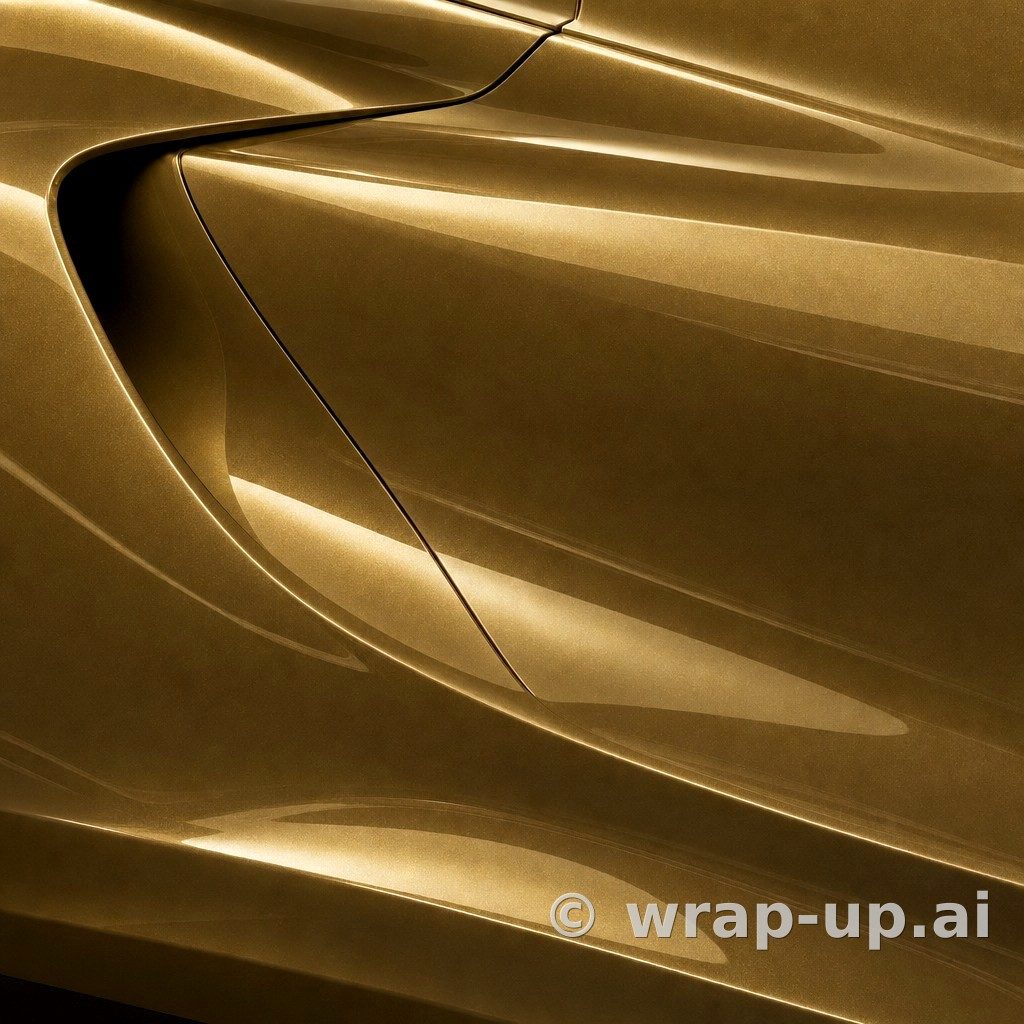
Beyond basic hues, specialised formulations change the entire character of a colour. Pearlescent finishes, which appear across 72 options in the catalogue, introduce secondary undertones that emerge only when the light hits a curved edge. A colour like Pink White Starlight (K75584) by KPMF demonstrates this behaviour, shifting between pale white highlights and soft pink undertones as viewing angles change. Similarly, Blue Black Iridescent (K75469) by KPMF transitions from an almost solid black in shadow to a rich blue along high-exposure panels.
Even neutral shades carry significant variation. A grey can lean warm or cool, chalky or metallic. Gloss NardoGray (G61) by 3M PWF offers a pure, flat concrete tone, whereas Glossy Stone Gray (711G) by Orafol 970RA and glossy nacre (946G) by Orafol 970RA bring distinct metallic flake and pearlescent warmth to what would otherwise be a simple grey profile.
How Finish Alters the Character of a Colour
A colour cannot be separated from its finish. The surface texture dictates how light reflects off the bodywork, directly affecting perceived depth, contrast, and panel shape.
Gloss and High Gloss
Traditional gloss and high gloss options remain the standard for drivers seeking a factory-painted appearance. In our catalogue, 210 colours carry a High Gloss finish, while 187 are standard Gloss. High gloss films, such as Gloss BLACK OLIVE (CN621) by Inozetek Vinyl or Gloss Viola (G248) by 3M PWF, offer sharp, mirror-like reflections. These reflections exaggerate the bodylines of cars with sculpted hips, sharp creases, and complex vents.
However, high gloss surfaces also pick up sky reflections and ground glare. On an overcast afternoon, a high gloss finish reflects the pale white sky, which can wash out subtle undertones in lighter shades like glossy champagne myst (996G) by Orafol 970RA.
Matte and Satin
Matte and satin films manage light in the opposite way. Matte finishes diffuse light completely, eliminating hard reflections and spreading ambient highlights across broad surfaces. In our catalogue, 147 colours feature a Matte finish, alongside 66 Satin options.
Under a matte finish, a colour like anodized bronze (K75549) by KPMF or Frozen Matte Cherry Blossom (FM3015) by Inozetek Vinyl loses the bright specular highlights of gloss. Instead, it relies on soft gradients between light and shadow to define body contours. Satin strikes a middle ground, retaining a muted sheen that outlines shoulder lines without creating mirror reflections. Frozen Satin Liquid Silver (FS2002) by Inozetek Vinyl highlights how satin silver catches edge highlights while keeping panel faces quiet.
Why Swatches and Online Photos Fall Short
A common mistake when selecting car wrap colours is relying on a small swatch book or photos found on social media.
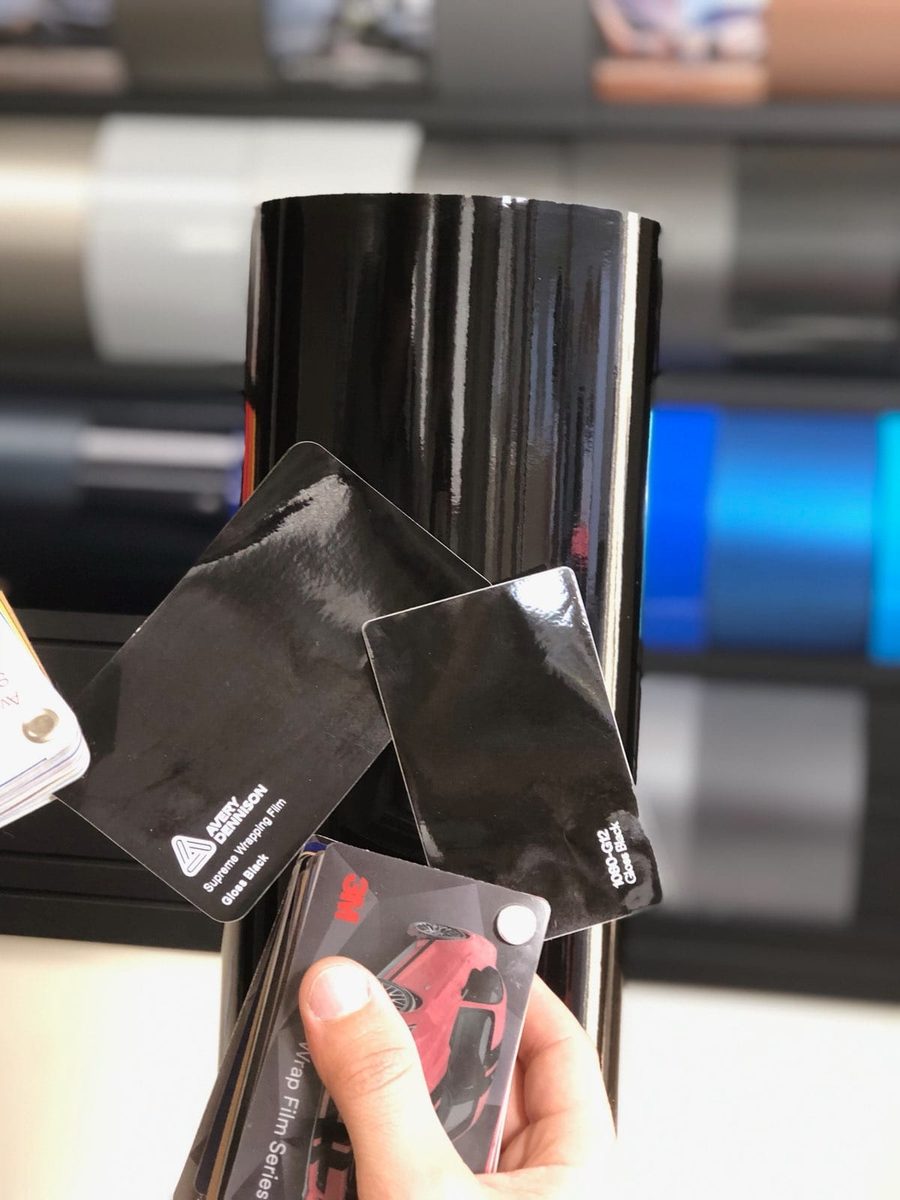
A physical swatch on a shop counter is typically no larger than a playing card. It sits flat under artificial indoor tube lighting. In that environment, you cannot observe how the film behaves when stretched across a curved bonnet, how the highlights break across a door crease, or how the colour responds to natural daylight. A dark metallic like glossy night blue metallic (196G) by Orafol 970RA may look nearly black on a counter swatch, only revealing its rich metallic flake when exposed to direct sunlight.
Looking at photographs of someone else's car presents a different problem:
- Camera settings and post-processing: Photographers regularly adjust saturation, exposure, and colour grading. A photo of Gloss Atomic Teal (G356) by 3M 2080 online may look turquoise in one photo and deep cyan in another.
- Vehicle proportions: A bold colour like glossy canary yellow (235G) by Orafol 970RA or Gloss CITRUS YELLOW (SG010) by Inozetek Vinyl looks balanced on a low-slung, angular sports coupe, but can appear overpowering on a tall, slab-sided family estate.
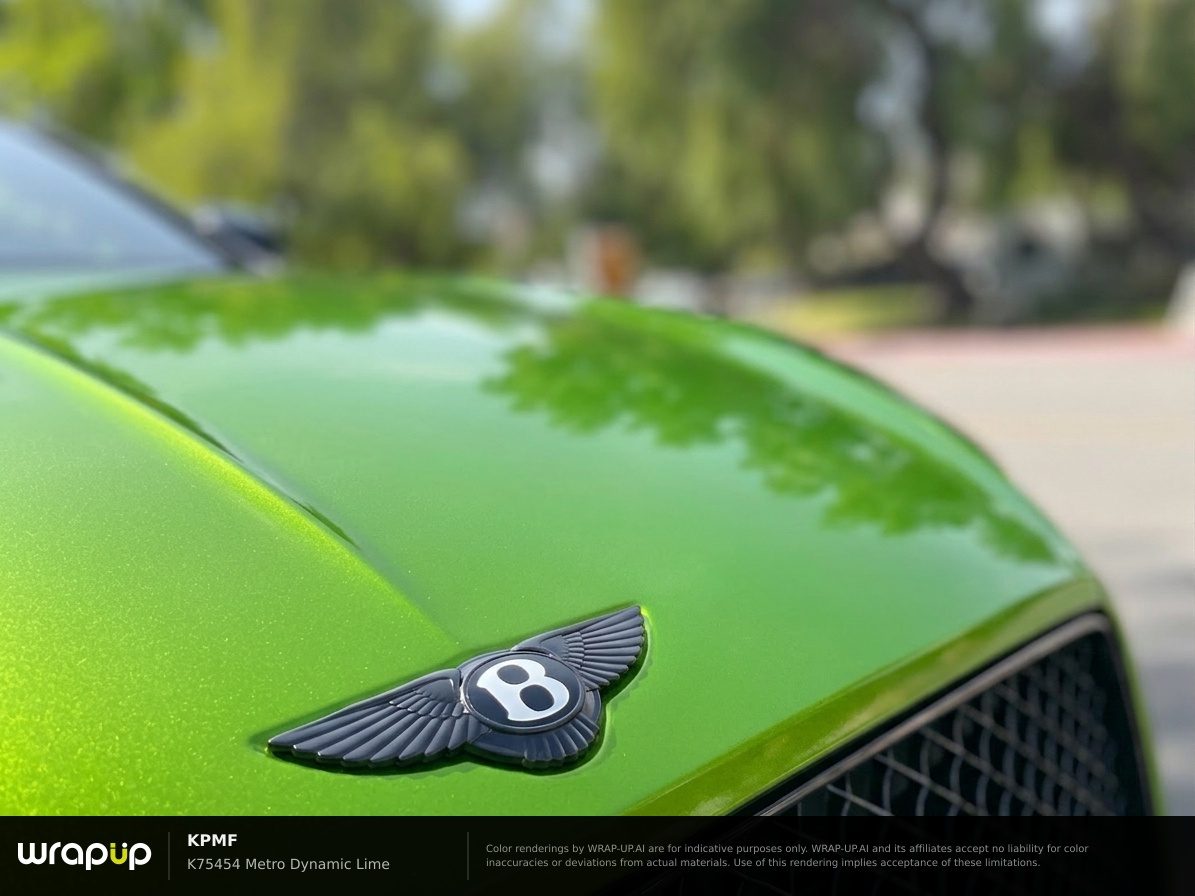
- Surrounding environment: Lighting conditions in a studio or a California desert bear little resemblance to a grey afternoon in the UK. Reflections of tarmac, trees, and buildings continually shift the colour tone of the car.
Seeing Colours on Your Own Vehicle
Because light and shape dictate how vinyl looks, the only reliable way to evaluate car wrap colours is in direct context. You need to see how a specific tone wraps around your car's specific body panels, under your local lighting conditions.
With WrapUp AI, you can upload a clear photo of your own car taken in its everyday environment. Pick an exact vinyl code from leading manufacturers—such as Inozetek Vinyl, Orafol 970RA, KPMF, or 3M 2080—and preview how that shade settles onto your vehicle.
Keep in mind that any digital render serves as a visual impression rather than an absolute colour match. Screen calibrations, camera sensors, and ambient lighting all influence how a digital image appears. However, testing colours directly on your car's panels allows you to compare options side by side—such as evaluating Gloss Verde Antico (GP256) by 3M PWF against Gloss GEMSTONE BLUE (CN603) by Inozetek Vinyl—to see which suits your car's design language.
You can test three renders for free, with no account needed to start. Explore the catalogue and preview your vehicle with the WrapUp AI car wrap visualiser.
See any car in any wrap colour — three renders free. Try WrapUp AI