Colors
Choosing a Gold Car Wrap: Undertones, Reflective Finishes, and Panel Shapes
Published
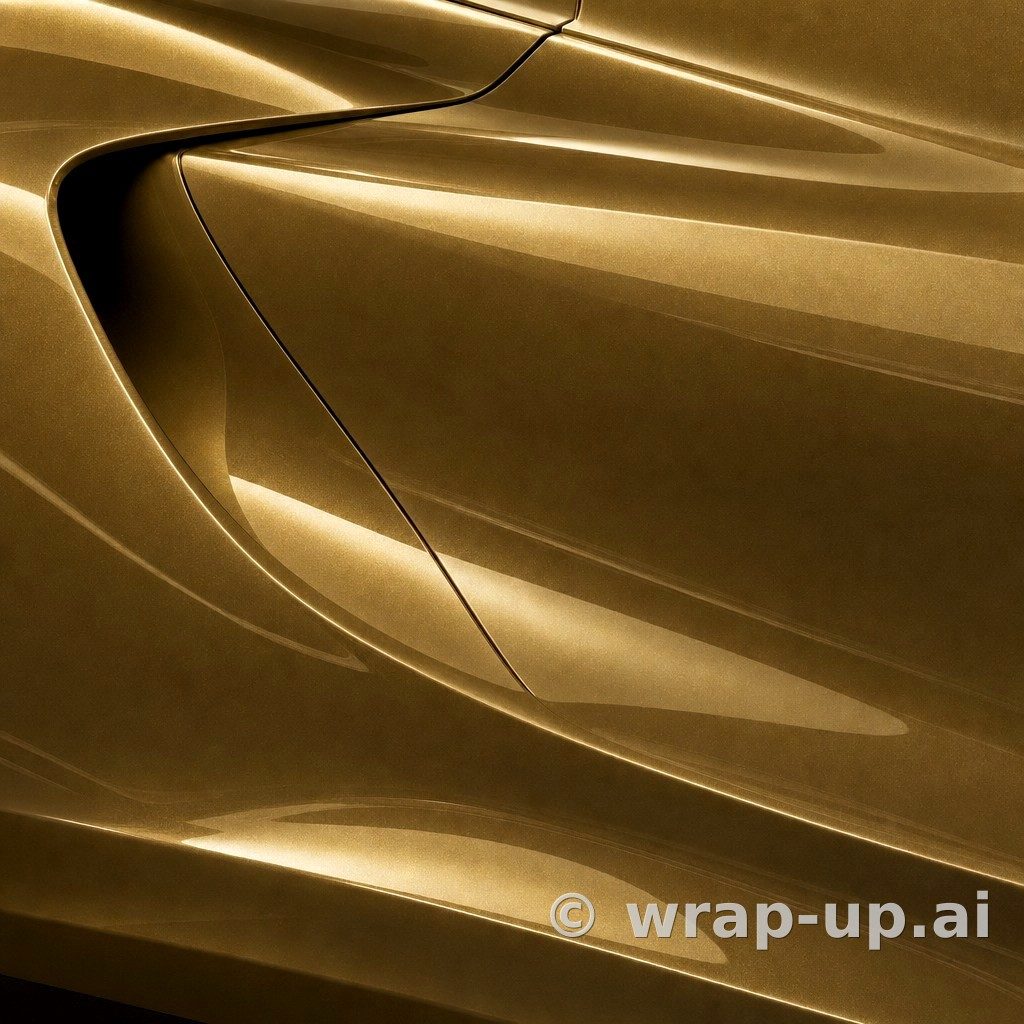
Choosing a gold car wrap is one of the most distinctive visual decisions you can make for a vehicle. Gold is rarely a single flat color. Depending on the formulation, it can read as a delicate champagne, an assertive warm yellow, an earthy bronze, or a rich reddish copper. Because gold films rely heavily on metallic flakes and surface reflectivity to generate their luster, their appearance changes dramatically depending on the shape of your car's panels and the ambient light around them.
Understanding the undertones and finishes available across vinyl manufacturers will help you pick a tone that flatters your vehicle rather than overwhelming its design.
The Spectrum of Gold: Undertones and Temperatures
Within vinyl manufacturing, gold spans a broad aesthetic range. In our catalog of 789 colors, the gold family accounts for 41 distinct options, each balanced with different secondary tones. Navigating these options requires identifying the underlying temperature of the film.
Champagne and Pale Golds
Pale golds often lean toward beige, silver, or light titanium. A shade like Gloss LIQUID METALLIC CHAMPAGNE (MSG2908) by Inozetek Vinyl, which carries both beige and gold characteristics in a High Gloss finish, provides a softer presence. Champagne tones reflect a crisp, bright highlight while maintaining warmth in the recesses. These shades tend to suit executive sedans, coupes, and cars with intricate body lines where a loud color might obscure subtle design details.
Warm and Copper Golds
On the other end of the spectrum, gold films can lean into deeper, reddish or brown hues. An example is glossy copper kiss (313G) by Orafol 970RA, classified across both brown and gold families in a Gloss finish. Rich copper and bronze tones carry more visual weight. They darken substantially in shade and reveal warm, glowing highlights under direct sunlight, making them particularly effective on vehicles with broad, muscular fenders.
True Yellow Golds
Yellow-dominant golds are the boldest interpretation of the color. Without the grounding influence of beige or copper, yellow golds command immediate attention. These films demand clean bodywork, as bright reflections draw the eye directly to panel gaps, styling creases, and surface contours.
How Finish Dictates the Personality of Gold
The finish you select will dictate how light moves across your car's exterior. Reflective and non-reflective finishes treat metallic gold flakes in fundamentally different ways.
- High Gloss and Gloss: Gloss finishes (representing 273 colors in our catalog) and High Gloss finishes (213 colors) create mirror-like reflections on top of the metallic base. On gold vinyl, a gloss clear layer produces sharp specular highlights along the shoulders and hood lines of the vehicle, accentuating sharp body creases.
- Satin: Satin finishes diffuse incoming light across the panel. Instead of pinpoint reflections, satin spreads a soft sheen across the bodywork, giving gold a liquid or molten appearance that emphasizes vehicle volume without harsh glare.
- Matte: A matte finish flattens direct reflections entirely. On gold films, this shifts the focus strictly to the undertone—turning bright metallics into muted sand, desert, or subdued brass tones.
- Chrome: Chrome finishes provide absolute, mirror-level reflectivity. While striking, chrome amplifies every contour and imperfection, creating high-contrast reflections of the vehicle's immediate environment.
Why Swatches and Online Photos Fall Short
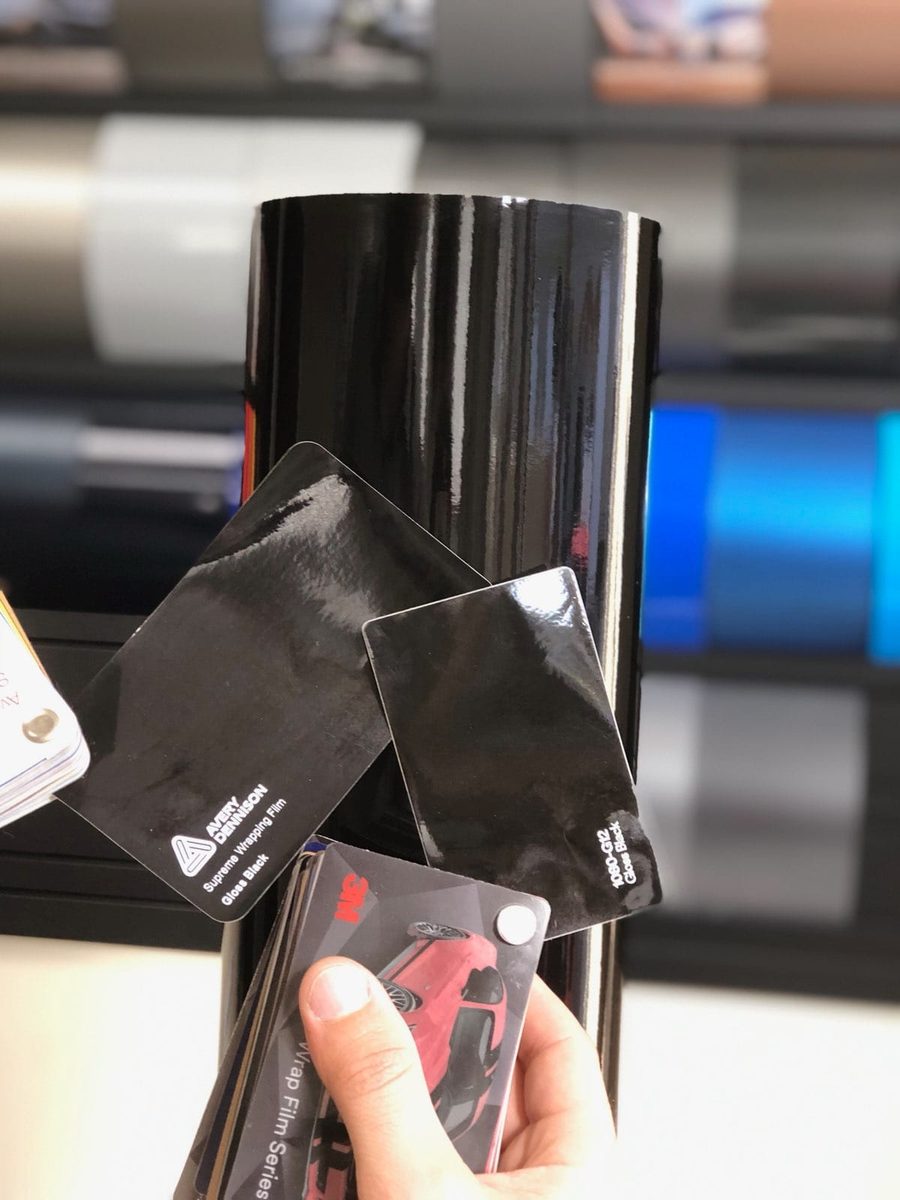
A common mistake when planning a wrap is relying on a two-inch sample swatch or looking at photos of other cars online. Both methods can easily lead to the wrong decision.
A small physical swatch held flat in your hand cannot demonstrate how gold behaves over the sweeping hood, curved wheel arches, or vertical doors of an actual car. Metallic vinyl requires surface curvature to showcase its transition from highlight to shadow. When you look at a tiny swatch under the artificial lighting of an office, you see only a fraction of the film's metallic travel.
Similarly, photos of someone else's car on social media rarely tell the whole truth. Camera lenses, color grading, post-processing filters, and specific lighting conditions alter the perceived color. A gold wrap photographed under an overcast European sky will look entirely different when parked under the direct midday sun of the American Southwest. Furthermore, a shade that looks balanced on an angular sports car may look overbearing on a compact hatchback or a tall SUV.
Visualizing Gold on Your Own Car
To make an informed decision, you need to evaluate the color directly on your vehicle's specific panels, taking into account its proportions, wheel setup, and trim.
With WrapUp AI, you can upload a photo of your own car and test real vinyl colors from leading manufacturers like Avery SW900, Orafol 970RA, 3M 2080, Inozetek Vinyl, and KPMF. You can compare a subtle champagne against a deep copper gloss to see how the highlights fall across your car's actual body lines. Keep in mind that a digital render is an impression of color, finish, and light rather than a physical color match, but it provides the perspective needed to choose with confidence.
You can generate your first three renders for free, with no account required to start. Upload your car photo to WrapUp AI and explore how different gold wraps transform your vehicle.
See any car in any wrap colour — three renders free. Try WrapUp AI