Before you wrap
How Much to Wrap a Car Roof: The Real Cost Factors and Visual Decisions
Published
When drivers evaluate styling upgrades, asking how much to wrap a car roof is often the first step toward personalizing a vehicle. Wrapping the roof is one of the most accessible partial wrap projects, frequently used to produce a modern two-tone aesthetic, mimic a panoramic glass canopy, or introduce aggressive texture. Yet when you ask an installer for an estimate, you rarely receive a single universal number.
Because every vehicle presents distinct hardware obstacles and every vinyl finish behaves differently, installation quotes reflect specific labor and material demands rather than a flat fee. Understanding what shapes the final invoice helps you plan your project, choose the right vinyl, and prepare your vehicle properly before handing over the keys.
Hardware and Disassembly Requirements
The primary variable in roof wrap labor is what sits on top of your car. A bare, smooth metal panel is relatively straightforward to address, but modern vehicles rarely feature bare roofs.
Antenna Covers and Shark Fins
Most modern cars carry an integrated satellite or GPS antenna shaped like a shark fin. To wrap a roof seamlessly, the vinyl should extend cleanly under the base of this antenna. On many vehicles, removing the shark fin requires partially dropping the interior headliner. If an installer has to remove interior trim, disconnect wiring harnesses, and drop the headliner, labor time increases considerably. While some installers can wrap around an antenna or wrap the fin separately using knifeless tape, a complete disassembly yields the cleanest finish.
Roof Rails, Gutters, and Moldings
SUVs and wagons frequently include roof rails or luggage mounting points. Removing these rails demands specialized tools and internal access to release mounting bolts. If the rails remain on the vehicle, the installer must navigate tight channels with precision cutting tape, which demands extra installation time and care to avoid visible seams or lifting edges.
Sunroofs and Panoramic Glass
Vehicles equipped with standard sunroofs require careful templating. The film must be tucked neatly into rubber weather seals without stretching the adhesive past its structural limit. Poor tension management around sunroof openings leads to vinyl lifting after exposure to summer heat.
Surface Geometry and Vehicle Proportions
The physical dimensions and curves of the roof panel dictate both the quantity of film required and the difficulty of the installation:
- Panel Length and Width: While standard passenger cars fit within standard roll widths, wide trucks, full-size SUVs, or extended vans require oversized cuts or specialized layout planning.
- Recesses and Roof Channels: Many sports cars and modern sedans feature aerodynamic contours, such as double-bubble channels or deep recessed body lines. Stretching vinyl into deep recesses without over-thinning the adhesive requires heat control and post-heating discipline.
- Spoilers and Hatch Transitions: On hatchbacks and crossovers, deciding where the roof ends is a practical consideration. Extending the film across a trailing rear spoiler adds disassembly, complex curves, and additional yardage.
Surface Condition and Preparation
Because a roof faces directly toward the sky, it absorbs the brunt of solar exposure and environmental fallout. A wrap will not conceal damaged clear coat, deep etching, or rust.
If a roof panel exhibits clear coat failure, peeling paint, or heavy industrial fallout, that surface must be corrected before vinyl application. Wrapping over peeling paint guarantees that the vinyl will lift, bubble, or tear away the remaining paint during removal. Installers must spend additional time chemically decontaminating, claying, or lightly wet-sanding imperfect clear coats to build an anchor for the adhesive.
Material Selection and Finish Complexity
The vinyl product you select plays a direct role in material cost and handling requirements. While gloss black remains the standard choice for creating a floating roof effect, the catalog includes 789 colors across varied brands and finishes.
Gloss and High Gloss Films
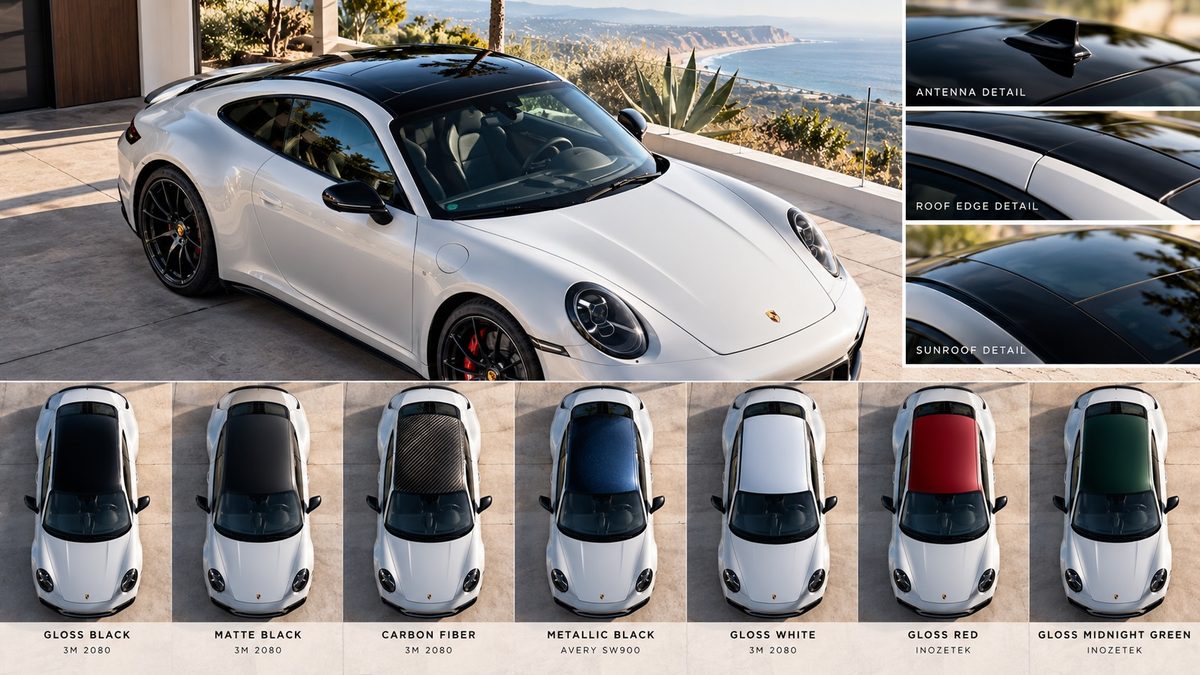
Drivers seeking the deep, reflective appearance of a glass roof often look toward High Gloss films (213 options in the catalog) or traditional Gloss (273 options). Products like High Gloss White (HG10) by 3M 2080 or deep solids provide clear reflections. However, glossy films feature sensitive surface caps and show installation squeegee marks or dust specks more readily than textured films, demanding pristine shop cleanliness.
Carbon Fiber and Textured Accents
For performance-oriented vehicles, carbon fiber films provide a distinct weave texture across the roof panel. A material like Black (CFS12) by 3M 2080 brings directional pattern and structural detail (one of 7 carbon fiber options in the catalog). Textured films often possess different stretching thresholds than cast gloss vinyls, requiring precise alignment so the pattern remains straight across the roof line.
Chrome and Specialty Effects
Specialty finishes like Black chrome (196) by Avery SW900 offer mirror-like properties, but chrome films behave rigidly compared to standard cast films. They require careful heat manipulation to avoid hazing or whitening the reflective layer.
Why Swatches and Other Cars Cannot Answer the Question
When choosing a roof color, many vehicle owners inspect a pocket-sized physical swatch book on a shop counter or search for photos of wrapped vehicles online. Neither method gives an accurate assessment of how the wrap will look on your specific car.
A two-inch vinyl swatch cannot demonstrate how light sweeps across a broad horizontal panel. Horizontal surfaces catch direct overhead daylight, bouncing reflections in ways vertical door panels never do. A color like Metallic Black (192) by Avery SW900 or Gloss MIDNIGHT GREEN (MSG023) by Inozetek Vinyl changes tone depending on cloud cover and the angle of the sun.
Similarly, viewing a photo of another car online is misleading. A black roof on a sharply creased fastback looks entirely different than the same film applied to a rounded crossover. The contrast between your vehicle's specific pillar design, window tint, and factory paint color dictates whether the roof wrap looks integrated or disjointed.
Previewing Your Roof Wrap Before You Commit
Before investing in materials and disassembly labor, evaluating the aesthetic contrast on your actual car prevents costly second-guessing.
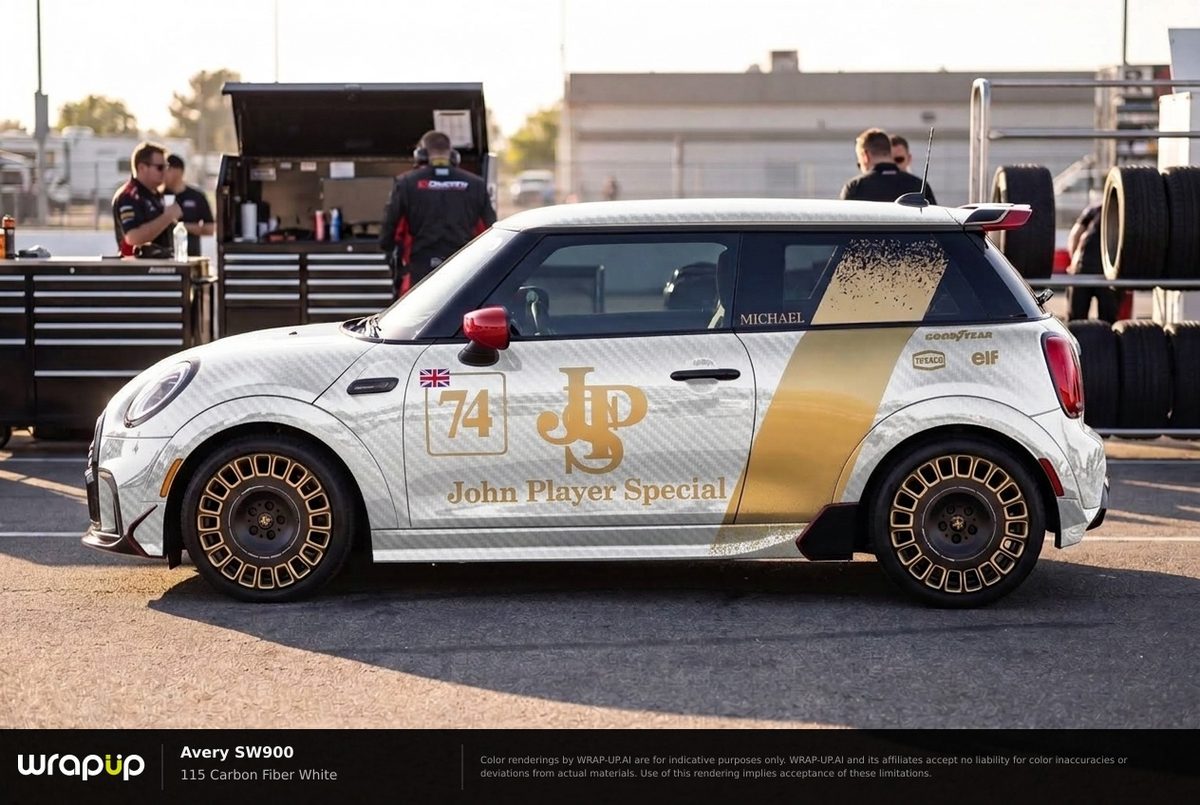
With WrapUp AI, you can upload a photo of your own car—in your own driveway or street setting—and preview real vinyl colors directly on your vehicle's roof and pillars. A rendered image serves as a realistic visual impression rather than a certified optical color match, giving you the perspective needed to judge contrast, stance, and finish before work begins. You can test three renders completely free with no account required to get started.
Explore how different finishes and shades complement your vehicle's bodywork with the WrapUp AI car wrap visualizer.
See any car in any wrap colour — three renders free. Try WrapUp AI