Colors
Midnight Blue Car Wrap: How Deep Navy and Dark Blue Films Behave in Real Light
Published
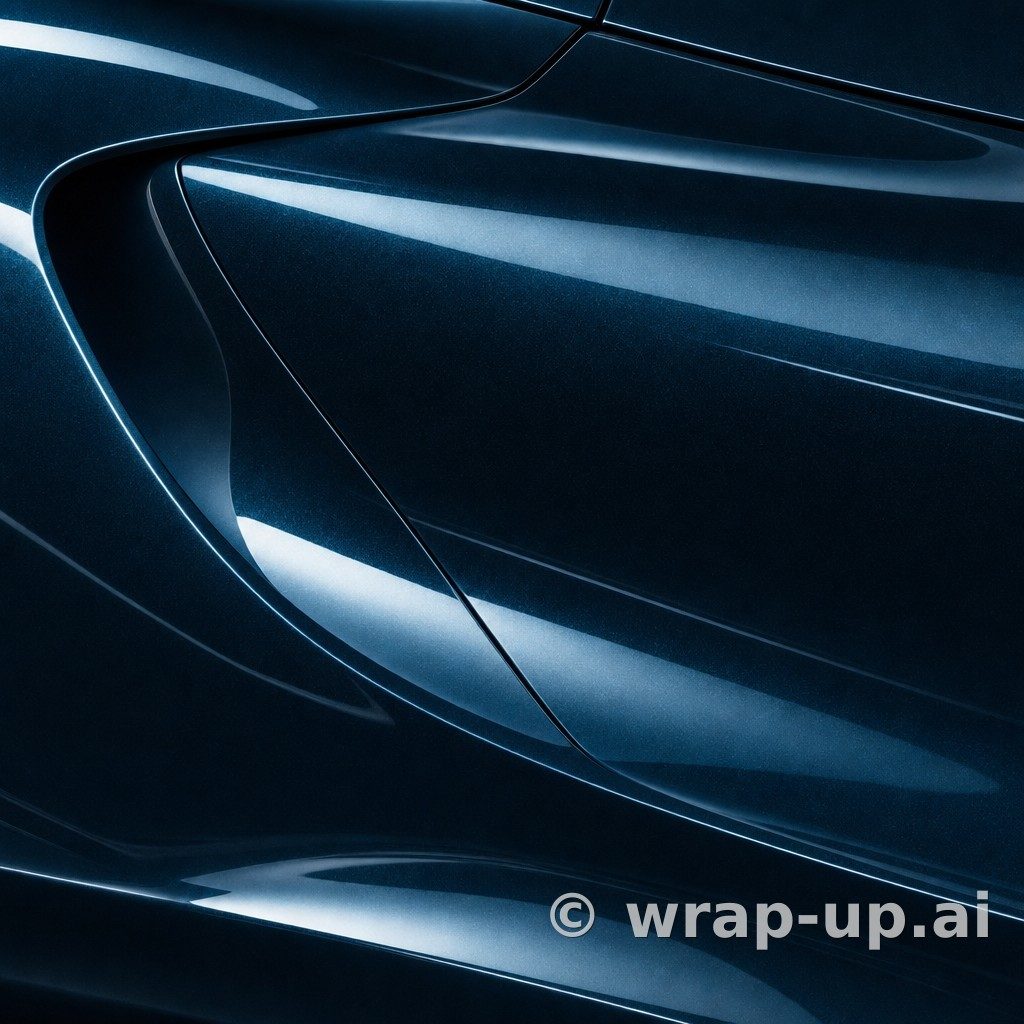
Choosing a midnight blue car wrap usually starts with a desire for subtlety. It offers the restrained presence of black while holding a distinctive blue character that reveals itself under direct sun or street lamps. Yet finding the right film in this category is rarely straightforward. Dark blue sits right on the boundary where lighting, panel contour, and surface finish determine whether the car looks navy, deep royal, or nearly pure black.
Understanding how deep blue vinyl interacts with automotive sheet metal helps you separate subtle variations in tone before committing to a visual direction.
The Spectrum of Dark Blue Vinyl
In vehicle vinyl catalogs, dark blue is not a single standardized shade. Across the 174 blue options in the catalog, blue encompasses everything from bright, vivid hues like Gloss MARITIME BLUE (SG730) by Inozetek Vinyl or Perfect Blue (S337) by 3M 2080 to muted coastal tones and near-black naval shades. When people search for a midnight blue aesthetic, they generally look for films that anchor deeply into navy, slate, or ink.
Different manufacturers treat this space with unique pigment profiles:
- Pure Inky Navies: These formulations feature very little yellow or red undertone. Under flat overcast skies, they read almost black. In direct sunlight, they show a disciplined, dark navy reflection.
- Slight Metallic or Pearlescent Blues: Some dark blues contain fine metallic or pearl flake. Excelsior Blue (K75441) by KPMF, for example, uses gloss reflection to catch highlights, allowing curved panel tops to flash bright blue while the recessed bodylines drop into dark shade.
- Teal and Slate Undertones: Certain dark blue shades skew subtly toward green or gray, similar to how glossy sea blue (509G) by Orafol 970RA leans toward aquatic tones compared to a true navy.
Because vehicle bodies consist of planes pointing toward the open sky and vertical panels reflecting the street, a dark blue film will constantly display two or three tones simultaneously across your car.
How Finish Reshapes Midnight Blue
Surface finish determines how crisp the boundary between blue highlights and dark shadows appears.
Gloss and High Gloss
Gloss options (273 in the catalog) and High Gloss films (213 options) create mirror-like reflections that amplify contrast. On a midnight blue car, high gloss creates razor-sharp highlights along shoulder creases and hood ridges. The sun creates a focused, intense blue spot, surrounded by a rapid fade into deep, dark navy. If your car has sharp bodylines and pronounced curves, high gloss emphasizes that geometric definition.
Satin
Satin films (104 options across the catalog) diffuse reflected light into a soft sheen. On midnight blue, this eliminates harsh specular glares. Instead of a tiny bright reflection fading into black shadows, satin spreads the blue tone evenly across curved fenders and door skins. The car looks consistently dark blue across broad panels rather than alternating between bright glints and shadowy black voids.
Matte
Matte films (167 options in the catalog) scatter all ambient light uniformly. In midnight blue, matte turns the color into a dry, chalky deep navy. Without surface reflections, the car's three-dimensional shape relies solely on natural ambient shadow. Midnight blue in matte is strikingly quiet, though it can lose the sense of depth that metallic or gloss layers provide.
Why Swatches and Social Media Photos Mislead
A three-inch swatch sample placed on a counter cannot tell you how a midnight blue car wrap will behave on your vehicle. A swatch is completely flat and illuminated by overhead fluorescent or shop lighting. It cannot show you how a deep navy pigment transitions as the hood curves down into the front grille, or how your rear quarters absorb low-angle afternoon sun.
Looking at photos of other vehicles online is equally deceptive. Digital images posted on social media are heavily influenced by camera sensors, post-processing, polarizing filters, and specific environments. A dark blue film photographed in an overcast industrial park in London will look dramatically darker than the exact same roll photographed under bright midday sun in Arizona. Furthermore, panel architecture matters: a rounded coupe distributes light differently than a tall, flat-sided truck.
To understand whether a dark blue film works, you need to see that tone draped over the specific bodylines of your own vehicle in realistic ambient light.
Evaluating Midnight Blue on Your Vehicle
Instead of guessing how a particular vinyl swatch might look once applied, you can preview the appearance digitally before making a decision. WrapUp AI allows you to upload a photo of your own car and visualize it in authentic vinyl films from major manufacturers like Inozetek Vinyl, Orafol 970RA, Avery SW900, KPMF, and 3M 2080.
Because the visualization works directly on your photo, you see the color interacting with your vehicle's specific bodylines, trim, and ambient environment. Keep in mind that any digital render represents a visual impression rather than a laboratory color match, giving you an accurate feel for tonal depth, finish texture, and overall contrast. You can start exploring immediately—three renders are completely free, with no account needed.
Compare deep blue films alongside classic blacks, slates, and rich dark hues to see how subtle changes in finish and undertone transform your car's exterior.
See any car in any wrap colour — three renders free. Try WrapUp AI