Colors
Midnight Purple Car Wrap: Undertones, Light Shifts, and Panel Curves
Published
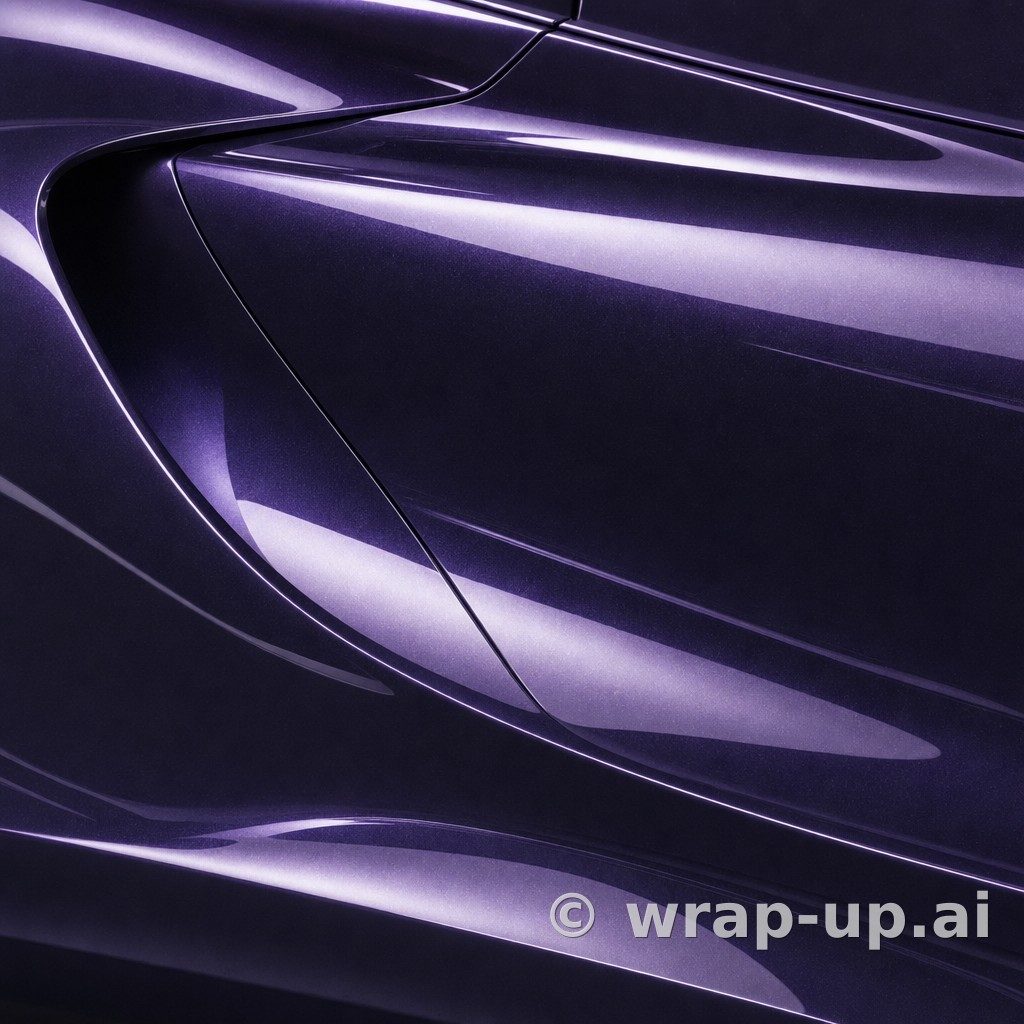
A midnight purple car wrap is one of the most distinctive choices in vehicle styling, but it is also one of the hardest to judge before application. At first glance in low light, the colour can appear almost completely black. Under direct sunlight or streetlamps, the surface breaks into rich violet, deep plum, or subtle indigo highlights along the body lines.
Because the shade relies heavily on the balance between deep black shadow and intense coloured reflection, its appearance changes dramatically depending on the shape of your car, the vinyl finish, and the ambient environment.
The Anatomy of Midnight Purple
Unlike flat or pastel purples, midnight purple relies on high contrast between illuminated crests and recessed shadows. Across the 49 purple shades in our catalogue of 773 vinyl colours, purple wraps cover everything from bright magenta tones like Fierce Fuschsia (G348) by 3M 2080 to muted, dusky variants.
A true midnight purple, however, sits right at the edge of the black family. The base tint carries a dense, dark pigment that swallows light in flat areas, while the metallic flakes or pearl additives catch incoming light on the contours.
Depending on the manufacturer and the film composition, midnight purples generally tilt toward one of three undertones:
- Blue and Indigo Undertones: Shades like Metallic Mysterious Indigo (700) by Avery SW900 lean cooler. In shade, they appear dark navy or jet black; in direct light, they reveal a deep electric violet with cool blue undertones.
- Warm Plum and Red Undertones: Colours like Frozen Satin Metallic Plum Purple (FS2010) by Inozetek Vinyl incorporate reddish reflections. These films glow with warmth when the sun catches a flare or crease.
- Chameleon and Colorflip Shifts: Films that cross into the 15 colorflip options in our catalogue, or pearlescent formulations such as Matte Amethyst (316M) by Orafol 970RA, produce subtle shifts where edges roll from bronze or green into deep violet shadows.
How Finish Alters the Character of Deep Purple
The finish you choose determines how sharply the transition from black to purple occurs.
Gloss and High Gloss
Gloss films provide the most dramatic contrast. On a high gloss surface, ambient light produces crisp specular highlights. The transition between the deep black base and the saturated purple tone is sharp and defined. If your car has sharp swage lines, wide arches, or sharp bonnet creases, a gloss midnight purple will highlight those edges clearly while keeping the side panels deep and dark.
Satin and Metallic Satin
A satin finish diffuses the highlight across a broader surface area. Rather than a sharp point of light, satin spreads the purple sheen across the entire curve of a wing or door contour. Frozen Satin Metallic Plum Purple (FS2010) demonstrates this soft spread: the car maintains a velvety texture where the purple tone remains visible over a larger area of the panel rather than vanishing into pure black.
Matte and Absolute Matte
Matte surfaces, such as Royal Amethyst (K75803) by KPMF in Absolute Matte, eliminate reflections entirely. Without crisp specular highlights, the film relies entirely on broad daylight to display its purple pigmentation. In dull or overcast weather, a matte midnight purple will look consistently dark, revealing its violet character primarily along the soft roll of curved panels.
Why Swatches and Online Photos Mislead
Many people make the mistake of choosing a midnight purple from a small two-inch swatch booklet or a picture found on social media.
A physical swatch on a shop counter cannot show you how the colour works across a full-sized vehicle. A swatch is flat, stationary, and viewed under artificial indoor fluorescent tubes. It gives you no sense of how the colour travels around a front bumper, how it darkens along the vertical slab of a door, or how it reacts when moving between street lighting and dark roads.
Photos of other people's cars are equally deceptive. Camera sensors process deep purples unpredictably, frequently blowing out the violet saturation or crushing the dark undertones into flat black. More importantly, that photo shows another vehicle with entirely different panel angles, parked in a location with lighting conditions unlike where you drive and park.
A colour that looks rich and bright on a wide-arched coupé under bright summer sun may look like plain gloss black on a saloon parked under grey winter clouds.
Visualising the Shade on Your Own Vehicle
To understand whether a midnight purple car wrap suits your car, you need to see it on the actual bodywork lines of your specific vehicle in a realistic environment.
With WrapUp AI, you upload a photograph of your own car. The visualiser applies real vinyl colours from major manufacturers directly over your panels. You can see how the deep pigment settles into the recesses of your doors and how the violet highlight traces the exact creases of your bonnet and bootlid. Keep in mind that a rendered preview represents a digital impression rather than an exact physical colour match, but it provides the spatial context that a tiny vinyl swatch cannot offer.
You can test three renders for free without needing to create an account. Explore different finishes, test subtle undertone differences, and find the right balance before committing to a film.
Try midnight purple on your car with WrapUp AI to see how light and contour shape your favourite shade.
See any car in any wrap colour — three renders free. Try WrapUp AI