Before you wrap
How Much to Wrap a Car in Vinyl: The Real Cost Drivers and Material Factors
Published
When vehicle owners start asking how much to wrap a car in vinyl, they quickly discover that clear figures are hard to pin down. One installer might assess a project as a straightforward afternoon task, while another shop quotes significantly higher for what appears to be the same vehicle.
This variation exists because vinyl wrapping is not an off-the-shelf product. It is an intensive craft combining specialty materials with hours of precision hand labor. Rather than relying on arbitrary estimates, understanding the mechanical and aesthetic variables that determine wrap costs allows you to plan your project with confidence.
Vehicle Shape, Size, and Surface Complexity
The physical surface of your vehicle is the single largest factor in the final price. Larger vehicles naturally require more linear yards of vinyl film, but overall dimensions tell only part of the story. Surface complexity dictates the labor hours required to complete an install safely.
- Compound curves and recesses: Deep bumper inlets, sharp body lines, and aerodynamic diffusers require slow, controlled stretching and meticulous heat setting. Stretching film too aggressively compromises durability, so complex curves demand extra time and precision cuts.
- Disassembly requirements: A seamless finish requires wrapping vinyl edges around panel seams. To do this properly, technicians often remove door handles, taillights, headlights, side mirrors, and emblems. A vehicle requiring extensive teardown involves substantially more shop labor than one with accessible exterior trim.
- Surface condition: Vinyl accentuates whatever sits beneath it. Paint chips, clear coat peeling, dents, or deep scratches will telegraph through the film. Any correction work required prior to application adds prep time before the first roll is even unboxed.
Film Selection and Finish Grades
The specific roll of vinyl you select directly impacts the overall material expense. Professional color-change films are engineered differently depending on their intended finish, visual depth, and adhesive technology.
Across major manufacturers like Avery SW900, 3M 2080, Inozetek Vinyl, KPMF, and Orafol 970RA, standard solid tones often sit at a different tier than specialized materials. For example, standard gloss or matte films behave predictably under heat and squeegee pressure. However, specialized finishes present unique handling challenges:
- High Gloss and ultra-smooth films: Films such as Gloss BLACKOUT (SG001) by Inozetek Vinyl offer an intensely reflective, paint-like finish, but they require immaculate surface cleanliness and specialized installation techniques to prevent hazing or visible glue lines.
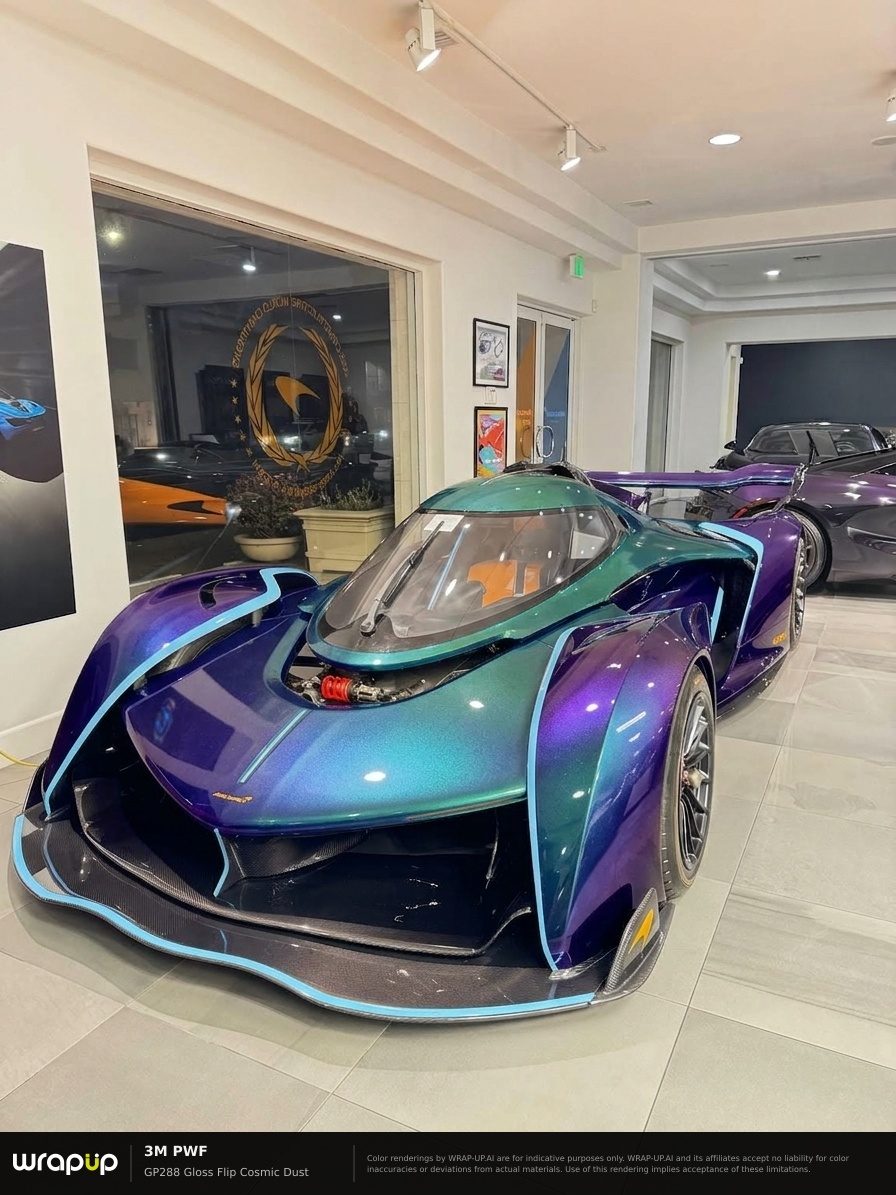
- Colorflip and pearlescent films: Options like Matt Sunset Shift (100m) by Orafol 970RA or pearlescent tones require strict directional alignment. Installers must run every panel in the exact same orientation off the roll so the metallic flake and optical shift match across adjacent doors and fenders.
- Textured finishes: Films categorized as brushed or structured—such as structured Rugged Marsh Green (738) by Avery SW900—cannot be stretched in the same manner as standard cast vinyl without distorting the embossed texture.
When a material requires directional matching or slower handling to preserve its finish, the installer must allocate additional material for waste and extra labor time for installation.
Scope of Coverage: Exterior vs. Full Coverage
Another fundamental variable is how far you want the color change to extend.
A standard exterior wrap covers every visible painted surface when the vehicle is closed: doors, hood, roof, quarter panels, and bumpers. However, opening a door reveals the original factory paint on the door jambs, sills, and inner pillars.
If you want a complete transformation where the original paint is hidden even when stepping inside, you must opt for jamb coverage. Wrapping door jambs involves wrapping around hinges, wiring harnesses, latch mechanisms, and tight inner curves. This process can easily double the time required to complete the vehicle, requiring meticulous disassembly and intricate hand-trimming.
The Real Risk of Swatch and Photo Decisions
Many vehicle owners focus entirely on installation quotes without considering the cost of choosing the wrong color. Deciding to re-wrap a vehicle because the final hue fails to match expectations is the most expensive mistake in the process.
Most wrap decisions start at a shop counter with a two-inch vinyl swatch. A small swatch under flat fluorescent shop tubes cannot show you how a color behaves across a sculpted vehicle. Light moves constantly across convex fenders and concave door recesses. A tone like Blue Fire (G337) by 3M 2080 or Misty Grey (8221) by Avery SW900 will look completely flat on a desk, but reveals intricate undertones and highlights when stretched across body panels under natural daylight.
Similarly, looking at photos of another vehicle online is fundamentally misleading. A color photographed on a sharp, angular sports coupe in low sunset light will not look the same on a rounded hatchback parked on an overcast suburban street. Body contours and ambient lighting determine what your eyes actually perceive.
Previewing on Your Own Vehicle Before Committing
Before investing in rolls of film and days of installer labor, you need to see how a specific color interacts with your car's unique sheet metal and your actual driving environment.
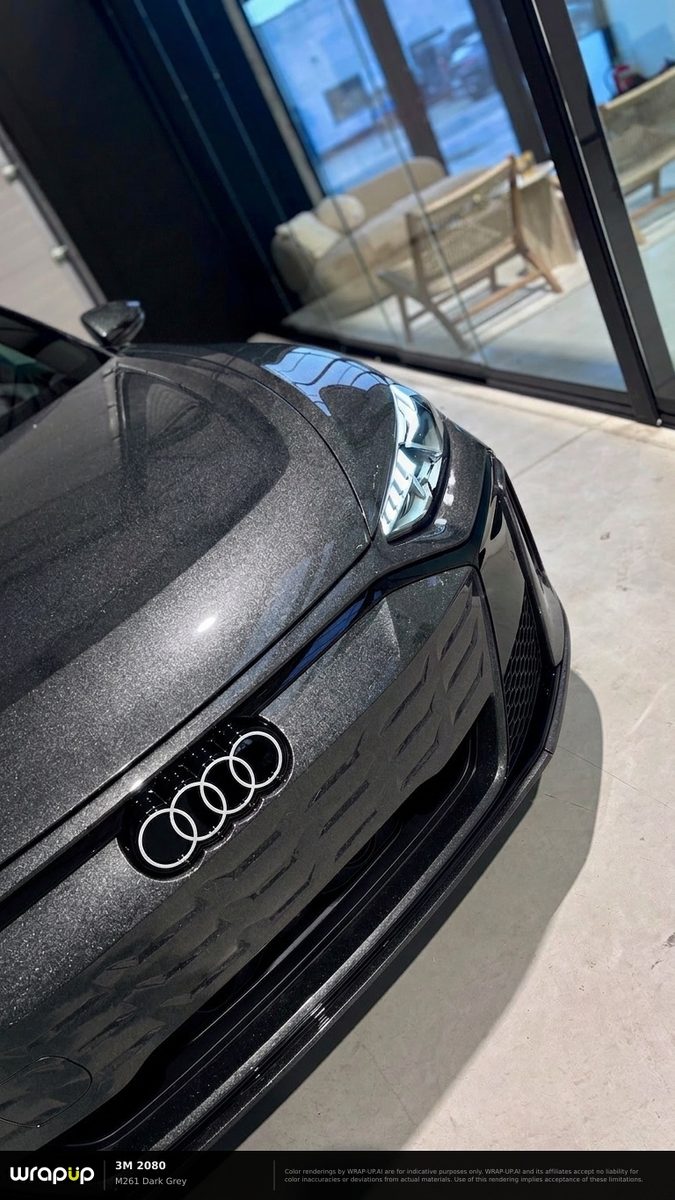
With WrapUp AI, you can upload a photo of your own car and see it rendered in genuine manufacturer colors from brands like 3M, Avery Dennison, KPMF, Inozetek, and Orafol. Instead of guessing how a shade will react to your vehicle's hood creases or door contours, you can preview the appearance directly on your own car in your real surroundings.
A rendered image serves as a visual impression rather than a microscopic physical color match, but it gives you the spatial perspective that small swatches cannot provide. You can compare distinct finishes—from deep satin tones like perfect black (K75547) by KPMF to high-gloss metallics—on the exact curves you see in your driveway every day.
Three renders are free to start, with no account needed. Before you request quotes or place material orders, test your favorite colors on your vehicle at WrapUp AI and move forward with total clarity.
See any car in any wrap colour — three renders free. Try WrapUp AI