Colors
Color Shift Car Wrap: How Light Angles and Panel Curves Drive the Transition
Published
Choosing a color shift car wrap introduces a visual dynamic that solid colors cannot replicate. Rather than presenting a static shade across every panel, color-shifting vinyl relies on pigment layers that reflect different wavelengths of light as the angle between the light source, the vehicle surface, and your eyes changes.
Because of this optical behavior, a color shift wrap looks completely different depending on the bodywork it covers, the time of day, and the chosen finish. Understanding how these factors interact helps you predict how a shifting film will actually look on your vehicle before committing to a material.
Understanding Color Shift Transitions
Every color-shifting vinyl is engineered with a specific travel path between two or more primary tones. The visualizer catalog includes 32 colors in the colorflip family among its 789 total options, illustrating just how varied these shifting palettes can be.
Most shifting films fall into distinct behavioral categories based on how broad their color travel is:
- Contrasting shifts: These materials travel between two opposite sides of the color wheel. For example, Satin Lightning Ridge (610) by Avery SW900 shifts noticeably between purple and green. The contrast between the direct angle and the grazing angle is stark, making panel edges stand out.
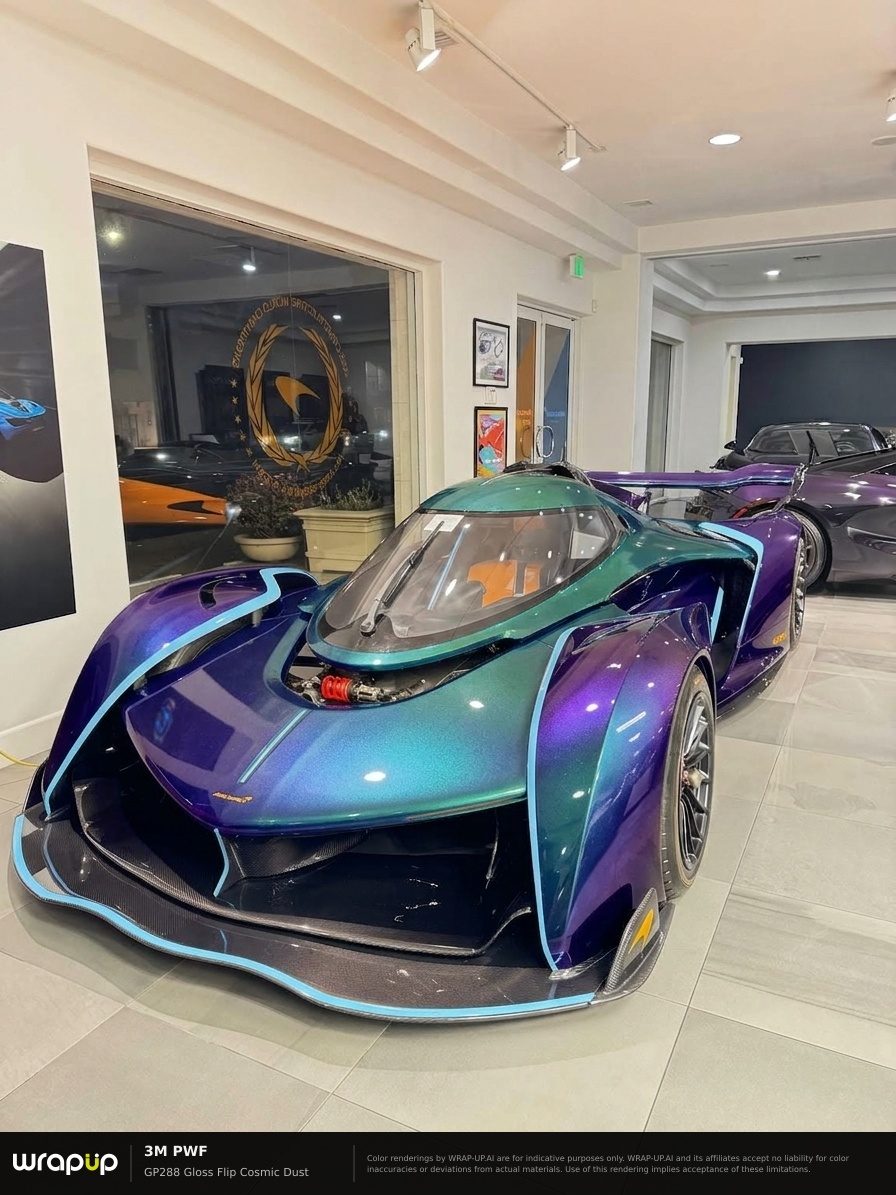
- Harmonious shifts: Other films move between adjacent tones on the spectrum. Gloss Flip Winter Rose (GP231) by 3M PWF, for instance, transitions across high gloss pink and purple tones. The movement is fluid, giving panels a rich, pearlescent depth rather than a sudden contrast.
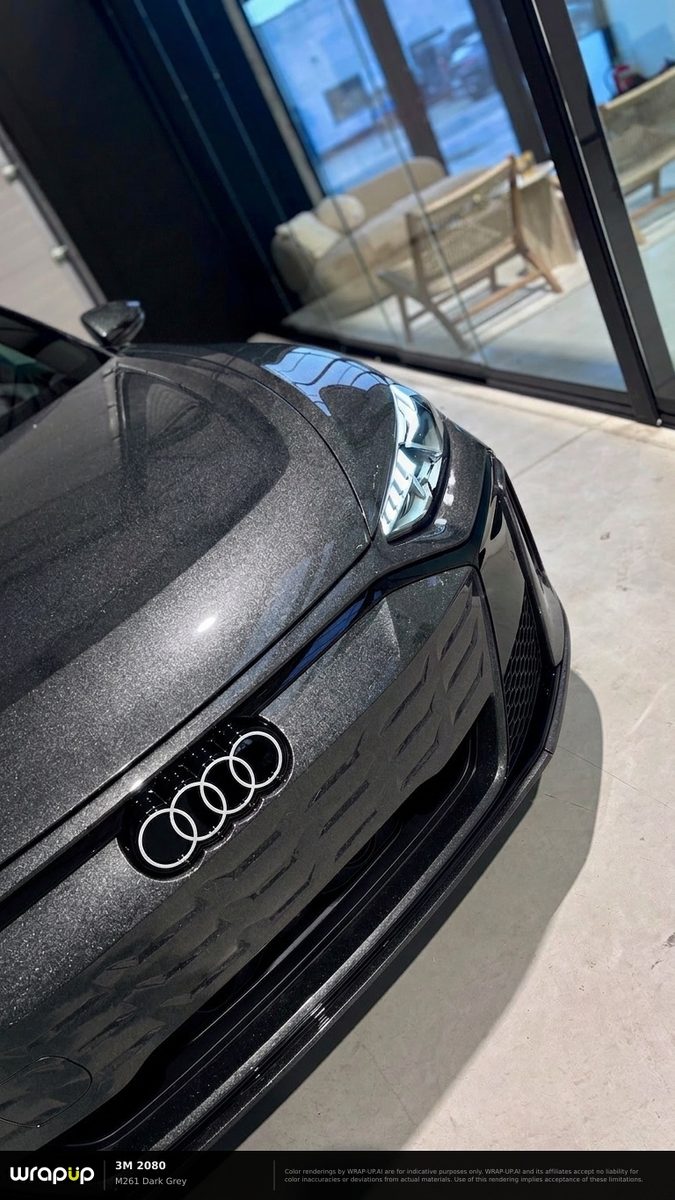
- Broad-spectrum shifts: Formulations like satin flip psychedelic (SP281) by 3M 2080 carry a subtle grey and blue base tone that splinters into a broader spectral shift when struck by direct sun.
The key to selecting the right shifting film is deciding whether you want an assertive transition where the vehicle displays two completely different colors at once, or a gentle gradient that merely accentuates body lines.
How Finish Alters the Shift: Gloss vs. Satin
The surface finish of a color-shifting vinyl directly dictates how soft or abrupt the color transition appears.
Gloss and High Gloss Transitions
In a gloss or high gloss finish, light reflects sharply off the clear top layer. This concentrates the dominant face color into clear reflection zones, while the secondary flop color appears along the outer edges of the curves where the surface turns away from the viewer. Gloss finishes produce high contrast and vivid, mirror-like highlights, but they also isolate the shift to specific hot spots where the light hits.
Satin Transitions
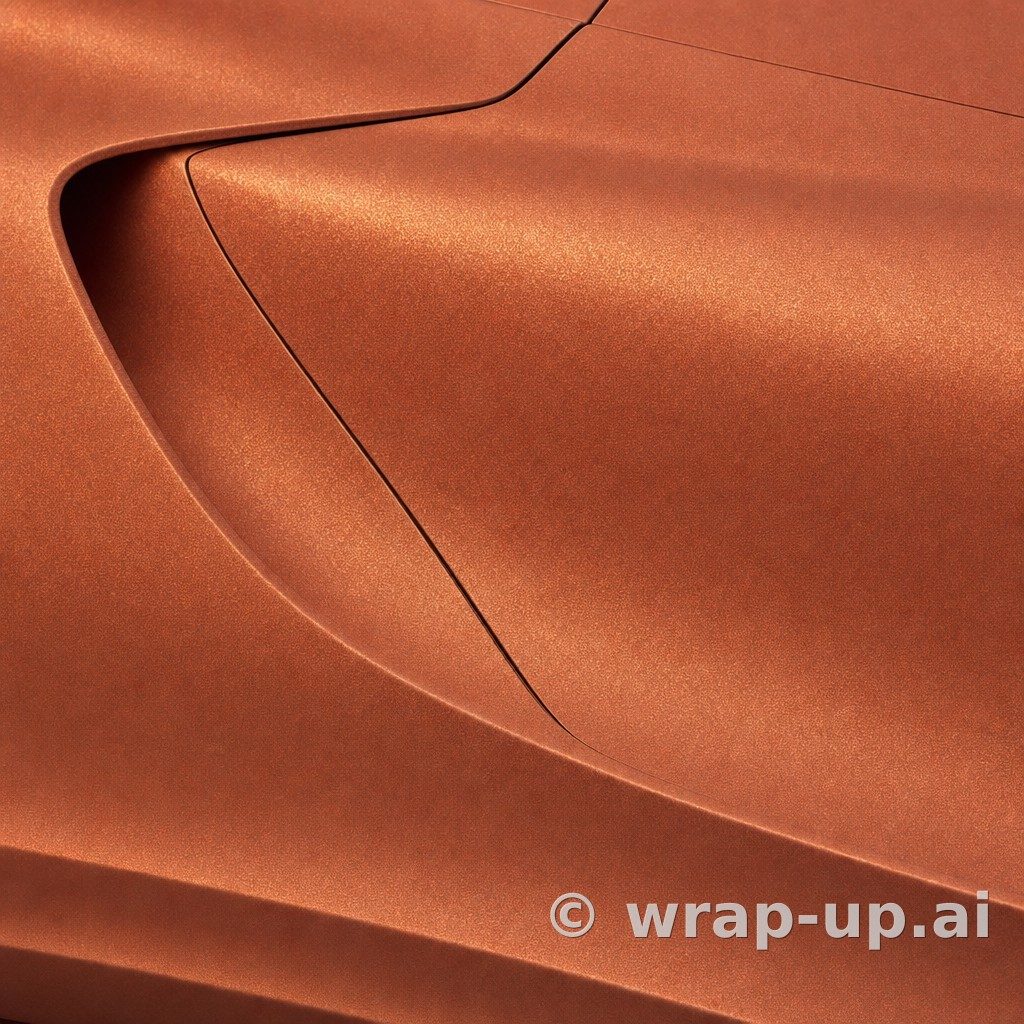
A satin finish scatters light across the surface. Because the reflection is diffused rather than concentrated into a pinpoint glare, the transition between tones stretches over a wider physical area. On a film like Satin Lightning Ridge, the shift from green to violet becomes a soft gradient rather than a sharp boundary line. Satin finishes often make color-shifting effects more noticeable in overcast lighting because the diffused illumination lets the pigment travel across the entire panel at once.
Why Vehicle Geometry Dictates the Shift
A color shift wrap relies entirely on changing surface angles. If a car has flat, slab-sided doors and an expansive, level hood, you will rarely see two colors on the same panel simultaneously. You might see the primary shade when looking directly at the door, and only see the secondary tone as you walk around toward the bumper.
Vehicles with complex curves, muscular rear quarters, deep hood recesses, and crisp body character lines reveal the full spectrum of a color shift film effortlessly. On a curved fender, the crown of the arch points upward toward the sky while the lower portion points toward the road. That continuous change in panel angle forces the film to show its entire color travel across a single section of the car.
The Limit of Swatches and Online Photos
Evaluating a color shift film using a small counter swatch is nearly impossible. A two-inch swatch cannot reproduce how sunlight drapes across a ten-foot hood or how streetlights move along a curved quarter panel. Tilted in your hand, a swatch shows a shift across a fraction of an inch, which gives no real sense of how the secondary hue will settle across flat surfaces versus flared wheel arches.
Looking at photos of other cars online is equally misleading. A color shift film photographed under bright studio lighting or low-angle sunset light will look radically different in your driveway under a cloudy sky. Furthermore, a film that appears balanced on a compact sports car with sharp body creases can look muddy or uneven on an SUV with tall, vertical doors.
Visualizing Color Shift Films on Your Car
To make an informed decision, you need to see how the color transitions across the exact contours of your own vehicle in realistic lighting conditions.
Using WrapUp AI, you can upload a photo of your own car taken in your actual environment and apply real vinyl colors from leading manufacturers to your bodywork. While any digital render represents an impression rather than an exact physical color match, seeing the gradients across your car's panels reveals whether a subtle hue like Gloss Flip Winter Rose or an expressive shift like Satin Lightning Ridge complements your vehicle's lines.
You can test three renders for free with no account required to start. Exploring the interaction between light, curve, and color on your own vehicle gives you the clarity needed to select your next wrap with confidence.
See any car in any wrap colour — three renders free. Try WrapUp AI