Before you wrap
Car Wrap Ideas: How to Choose a Direction That Suits Your Bodywork
Published
When you begin searching for car wrap ideas, the sheer volume of choices can feel disorienting. A single manufacturer catalogue might span hundreds of rolls, ranging from understated earthy tones to intense colour-shifting films. Scrolling through photos online often makes the decision harder rather than simpler, because what catches your eye on an exotic sports car parked under showroom spotlights rarely behaves the same way on a daily saloon sitting in the driveway.
Finding a wrap idea that actually works comes down to understanding how colour, finish, and panel shape interact on your specific vehicle.
Why Swatches and Social Media Photos Fall Short
Most people start gathering ideas by looking at photos of completed wraps online, or by flipping through a physical swatch deck at a local shop. Both methods have significant blind spots.
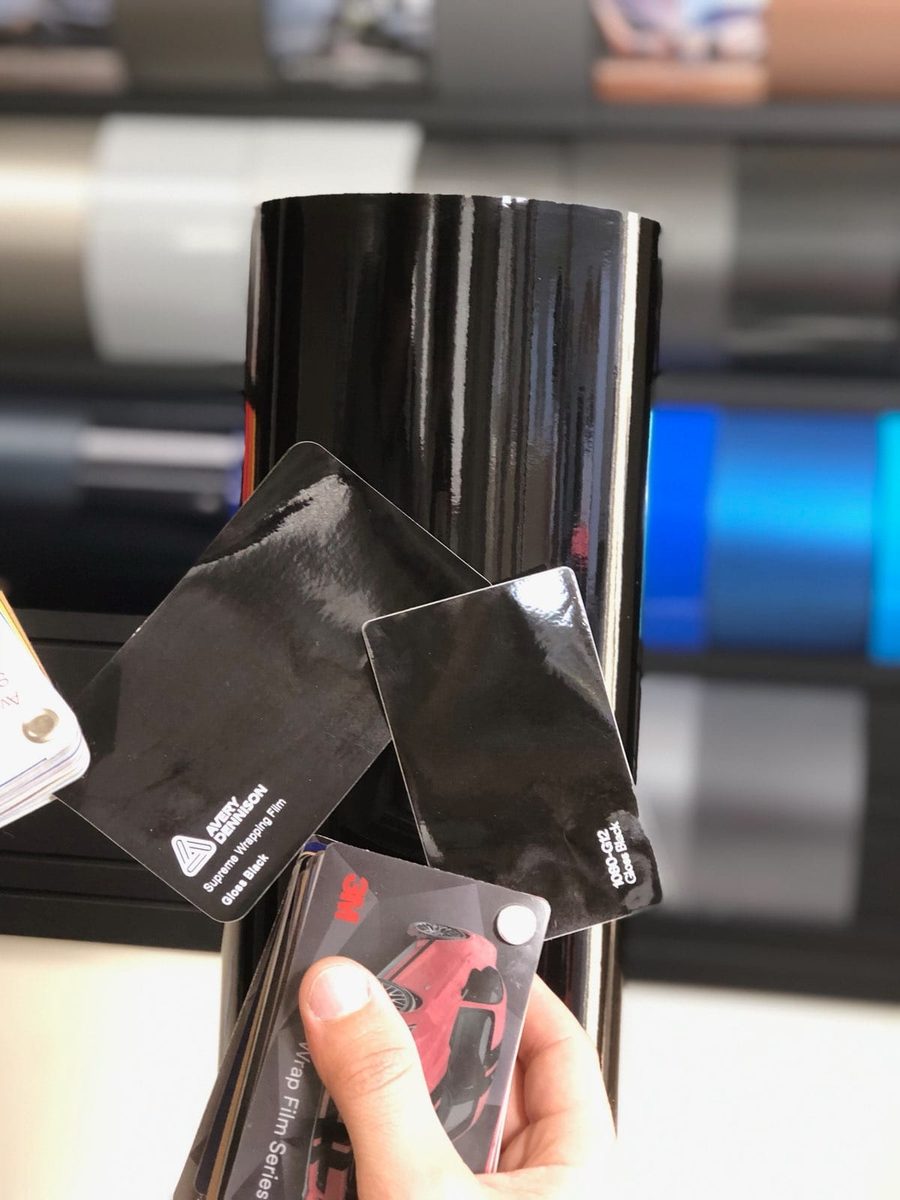
A flat vinyl swatch measures just a few inches across. It sits flat on a counter under artificial strip lighting. When you tilt it in your hand, you see how the surface reflects light across two or three square inches. However, a car is not a flat sheet. It is an assembly of complex curves, deep creases, vertical door panels, and horizontal bonnets. A shade that appears deep and subtle on a pocket-sized swatch can look overwhelmingly bright when spread across five metres of metal.
Looking at photos of other cars presents the opposite problem. A photograph taken in bright desert sunlight, heavily edited, or shot on a wide-body coupe with sharp, angular creases will not represent how that vinyl behaves on a softly curved hatchback in overcast weather. The colour is tied to the curves that catch the light and the surroundings reflecting into the clear coat or vinyl face. Until you see a shade applied across your car's exact proportions, an idea remains an educated guess.
Four Clear Directions for Wrap Ideas
Rather than browsing through hundreds of loose options at random, it helps to divide car wrap ideas into four broad visual directions. Each direction relies on a different relationship between colour tone and light reflection.
1. Earthy Neutrals and Utilitarian Tones
Moving away from traditional factory paintwork does not require choosing an eye-watering neon. A growing direction in wrap design focuses on solid, low-saturation tones that emphasize the car's utilitarian form.
- Desert and sand shades: Colours like Gloss SAND (SG005) by Inozetek Vinyl or Matt Coyote Brown (M99) by 3M PWF step away from standard greys without demanding excessive attention. They look deliberate and grounded.
- Deep organic greens: Dark, muted greens such as Gloss BLACK OLIVE (CN621) by Inozetek Vinyl give a vehicle substance. In high-gloss finishes, these colours look nearly black in shadow, revealing their tint only along the upper curves where the sky reflects.
These earthy tones work especially well on vehicles with pronounced wheel arches, square shoulders, or rugged bodywork, where sharp contrast with black trim elements creates balance.
2. Satin and Matte Metallics
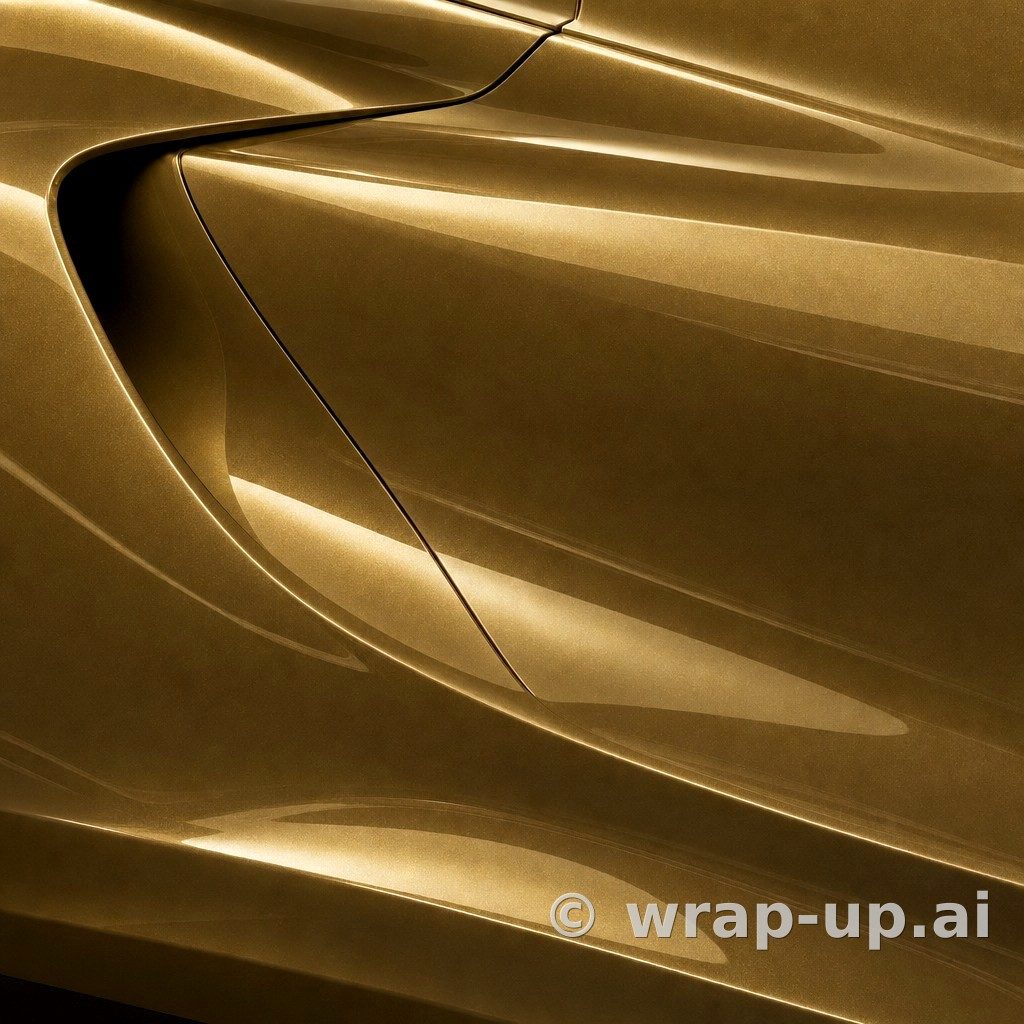
If you want to highlight the sculptured lines of your vehicle, a satin finish is often more effective than standard gloss. High gloss reflects the environment like a mirror, which can sometimes disguise intricate body creases beneath reflections of buildings and trees.
Satin and matte finishes disperse the reflection across the panel. A metallic flake suspended inside a satin carrier catches light in a soft, broad halo along curved surfaces:
- Liquid silvers and greys: Tones like Frozen Satin Liquid Silver (FS2002) or Frozen Satin Metallic Silver (FS2007) by Inozetek Vinyl trace body lines with gentle gradients from highlight to shadow.
- Subdued blues: A shade like Frozen Satin Narwhal Blue (FS2025) by Inozetek Vinyl or Perfect Blue (S337) by 3M 2080 softens bright ambient light while keeping deep contrast in the recesses of the doors and vents.
This direction suits modern saloons and coupes with crisp character lines running from the front wings through to the rear arches.
3. Rich, Deep Gloss Tones
High gloss wraps aim to replicate or exceed the clarity of a factory paint finish. The WrapUp AI catalogue contains 210 high-gloss options, making it the single largest finish category.
Deep gloss colours transform dramatically as you walk around the car:
- Aquas and teals: Gloss CARIBBEAN SEA (LIM006) by Inozetek Vinyl blends blue and green families, creating intense highlights along curved bonnets while settling into rich undertones along vertical doors.
- Classic jewel tones: Gloss HUNTER JADE (MSG117) by Inozetek Vinyl pairs green and grey families together, resulting in a dark, stately appearance that brightens into green when direct sunlight hits panel crests.
When planning a high-gloss wrap, keep in mind that reflections become part of the colour. A dark gloss finish picks up surrounding tarmac, buildings, and overcast clouds, making the vehicle look darker or cooler depending on the environment.
4. Pearlescent and Shifting Films
For those seeking more dynamic wrap ideas, pearlescent and colour-shifting films offer panels that change hue depending on the viewing angle. Across the catalogue, there are 72 pearlescent colours and 15 dedicated colorflip options.
- Subtle shift: Films like glossy sunset shift (100G) by Orafol 970RA introduce a warm pearlescent layer over an orange base, flashing gold or red highlights as light rakes across the car.
- Bold transition: Options like satin flip psychedelic (SP281) by 3M 2080 move visibly between grey and blue families as your perspective changes.
Shifting films rely heavily on curvature to work. On a flat panel, the shift is barely perceptible; on a curved wheel arch or a contoured bonnet, the full spectrum appears at once across the curve.
Matching Finish to Your Car's Architecture
Before picking a specific roll, assess your car's physical architecture:
- Soft, rounded panels: Cars with gentle, flowing curves benefit from high-gloss colours and pearlescent finishes, which create rolling light pools that follow the metal.
- Sharp, angular lines: Cars with aggressive creases, sharp bonnet vents, and abrupt transitions often look striking in satin or matte tones like Frozen Matte Warrior Green (FM3005) by Inozetek Vinyl or Matte Bronze (920M) by Orafol 970RA. The diffused finish prevents reflections from breaking up the geometric lines.
- Heavy black plastic or chrome trim: Take stock of the accents already on your vehicle. A bright shade like glossy maize yellow (209G) by Orafol 970RA pairs naturally with heavy black trim, whereas a soft metallic like glossy dove blue metallic (195G) might look more balanced alongside factory chrome.
Visualise the Idea on Your Own Car
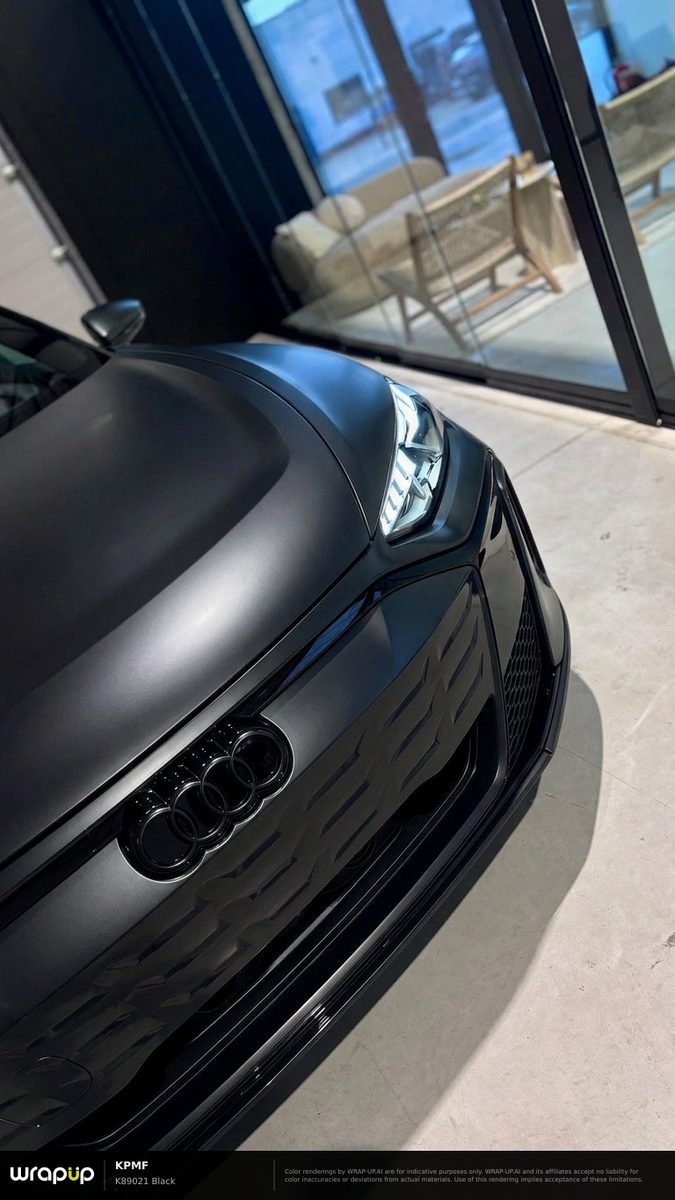
No matter how clearly you picture a finish in your head, the only reliable way to evaluate car wrap ideas is to view the vinyl directly on the car you drive. A rendered colour serves as an impression rather than an absolute physical colour match, but it reveals how the finish drapes across your car's specific body lines, sits next to your actual trim, and responds to real lighting conditions.
You do not need to rely on guesswork or generic stock photos. Upload a photograph of your own vehicle to WrapUp AI to see how different colours and finishes look on your exact model in your own setting. You can test three renders for free with no account needed to get started.
See any car in any wrap colour — three renders free. Try WrapUp AI