Before you wrap
Considering a Car Wrap in Carbon Fiber: How Pattern and Finish Affect Your Bodywork
Published
Choosing a car wrap in carbon fiber is fundamentally different from selecting a standard solid colour. While most wraps rely on hue and clear coat reflectivity to define a vehicle's silhouette, carbon fiber introduces a repetitive, directional pattern that interacts with light in its own distinct way.
Whether you are considering accents on a roof and bonnet or evaluating a complete transformation, understanding how patterned vinyl behaves on three-dimensional bodywork is essential before you make a decision.
The Visual Mechanics of a Carbon Fiber Finish
A traditional gloss or matte wrap presents a uniform surface to the eye. When sunlight hits a solid colour, the light rolls smoothly across the panels, highlighting body lines and falling away into soft shadows.
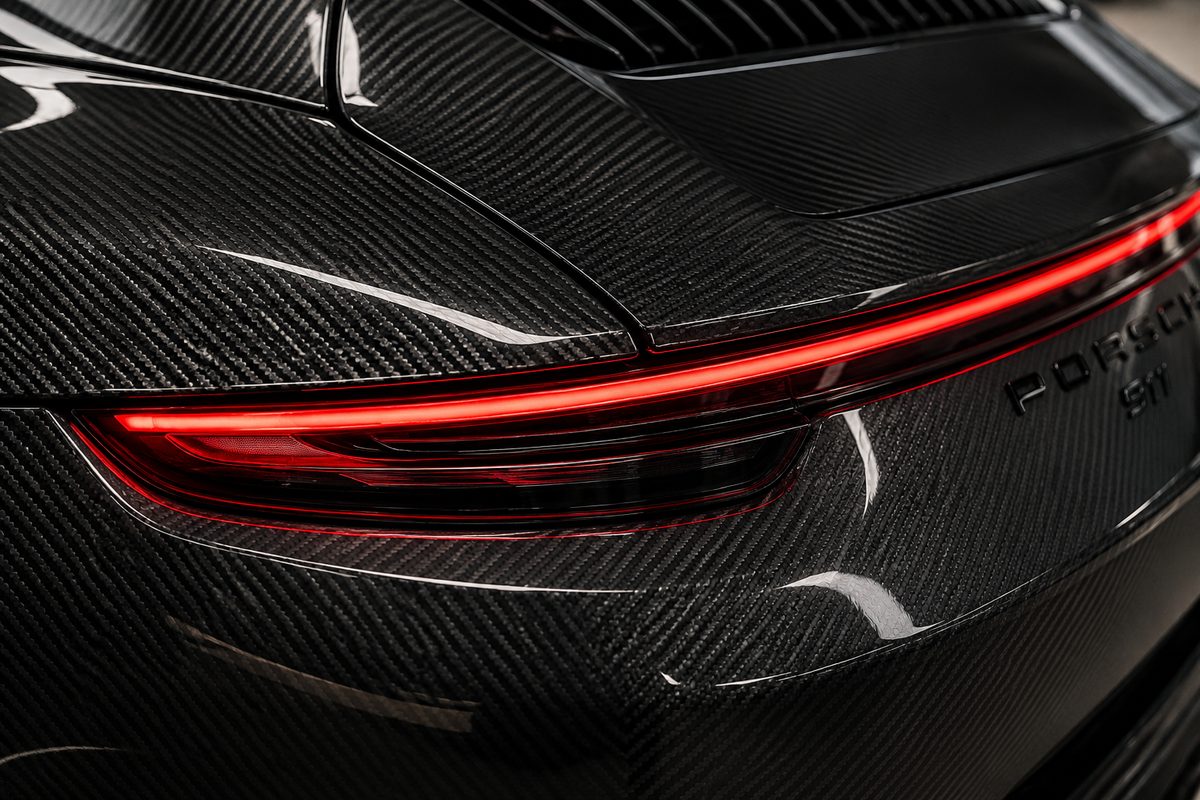
A carbon fiber finish disrupts this uniformity. The surface consists of an embossed or printed weave pattern designed to mimic layered composite strands. Instead of a single specular highlight, each segment of the pattern catches ambient light at alternating angles.
In our catalogue of 624 colours, specialised textured finishes represent a deliberate minority. There are just 4 Carbon Fiber finishes, alongside 4 Brushed and 2 Structured options. By comparison, smooth finishes dominate the landscape, with 210 High Gloss, 187 Gloss, 147 Matte, and 66 Satin colours. Because textured wraps are so concentrated in number, selecting one requires a clear understanding of its visual weight.
On flat surfaces, such as the centre of a bonnet or a clean roof section, the weave provides subtle texture that shifts as you walk around the car. On complex compound curves, sharp swage lines, and aggressive bumpers, the visual effect changes dramatically. As the panel bends, the pattern bends with it, altering the apparent density of the weave and creating distinct bands of contrast.
Contrast and Panel Placement
Most drivers consider a carbon fiber finish as an accent rather than a total vehicle wrap. This is largely due to how strongly the pattern contrasts with neighbouring painted or wrapped panels.
When paired with a solid colour, carbon fiber draws the eye directly to the wrapped area:
- Bonnet and roof accents: Placing carbon fiber across horizontal surfaces grounds the vehicle visually, giving it a lower, more focused stance.
- Wing mirrors and spoilers: Small component accents add detail without overwhelming the primary body colour.
- Splitters and diffusers: Lower body accents frame the car, though their visibility depends heavily on ground clearance and road lighting.
Pairing carbon fiber with existing finishes requires careful thought about sheen. If your car is wrapped in a deep solid tone—such as Black (S12) by 3M 2080 in Satin, or a sleek metallic like High Gloss Meteor Gray (HG81) by 3M 2080—a carbon fiber accent will look cohesive because both surfaces share a muted, controlled reflection. If the vehicle is finished in an intense high-gloss shade, the carbon finish will stand out in sharp contrast.
Why Swatches and Social Media Photos Mislead
A common mistake when researching carbon fiber wrap is relying on a hand-held swatch or an image found online. Neither can accurately predict how the material will look across your own bodywork.
The Problem with the Hand-Held Swatch
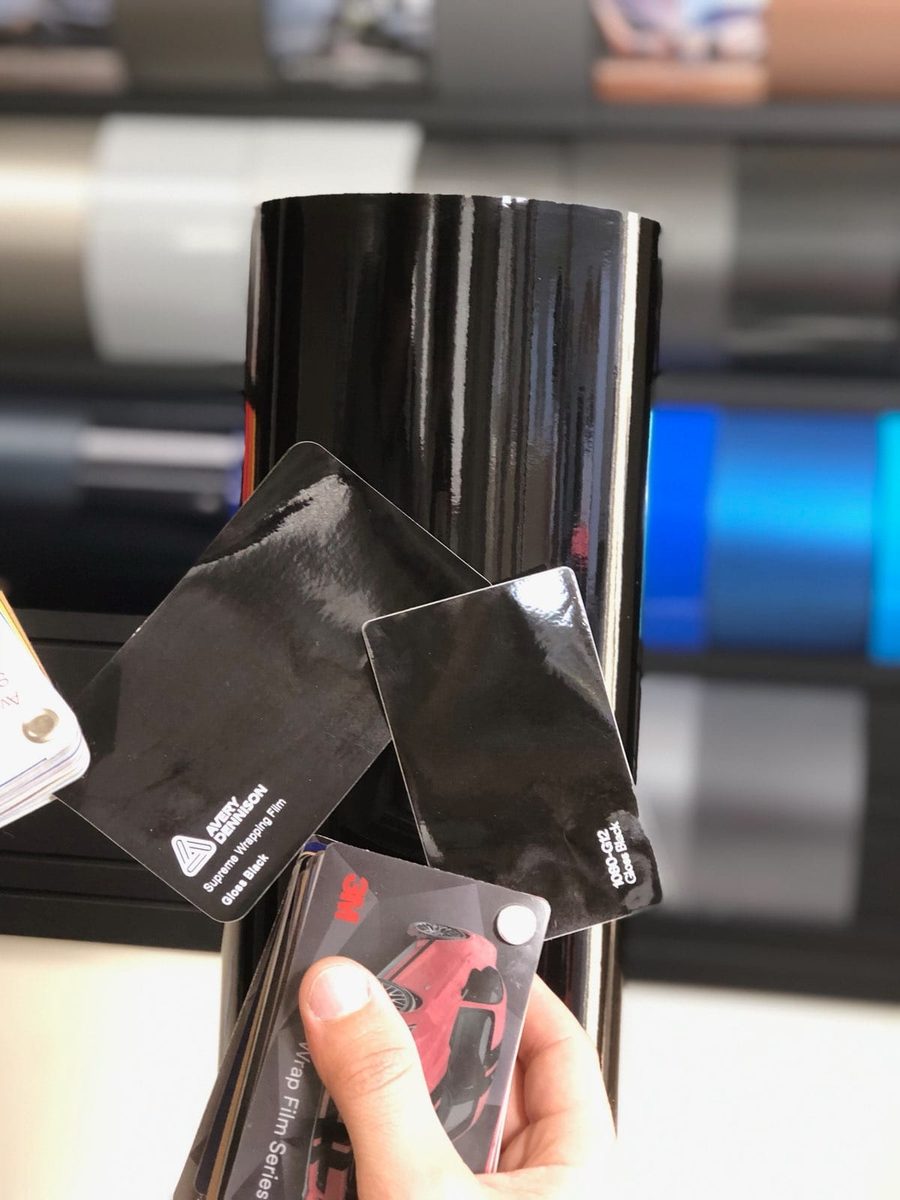
A physical swatch is typically no larger than a playing card. Held under bright showroom strip lights at a distance of thirty centimetres, the weave looks crisp, deep, and distinct. However, a car is not viewed under showroom tubes from twelve inches away. On an actual vehicle parked outside under grey overcast skies, that same pattern softens and reads as a muted dark grey from five metres away. A swatch cannot demonstrate how light sweeps across a bonnet that spans nearly two square metres.
The Problem with Someone Else's Car
Online photographs are equally deceptive. A sports car photographed in a studio under directional spotlights will show pronounced highlights in the weave that do not exist on a suburban street. Furthermore, different cars carry different lines. A wide, flat bonnet displays a carbon weave in an unbroken plane, whereas a vehicle with heavy sculptural ridges will break the pattern across multiple angles.
Seeing a colour or texture on another car tells you only how it looks on that specific shape, in that specific light. It tells you nothing about how it will settle against your own car's creases and proportions.
Previewing Patterned Finishes on Your Own Car
Because carbon fiber creates such a strong graphic statement, visualising it on your specific vehicle before making a commitment eliminates guesswork.
With WrapUp AI, you can upload a photograph of your own vehicle—taken in your driveway, on your street, or under your regular local lighting—and apply colours from our catalogue directly to your panels. You can see how darker tones and structured finishes read against your car's specific wheel colour, trim, and body creases.
Every visual render represents an impression rather than an absolute physical colour match, serving as a reliable guide to balance, light interaction, and contrast. You can explore how carbon and dark neutral tones balance your vehicle lines without guessing from a small sample.
To see how different finishes sit on your own car, you can generate your first three renders for free with no account needed to start. Test your ideas directly on your vehicle at WrapUp AI and discover how texture and tone transform your bodywork.
See any car in any wrap colour — three renders free. Try WrapUp AI